Tuesday, May 6, 2025

Grade 7 Symmetry Chapter Test 2025-2026


 Grade 7 Symmetry Chapter Test 2025-2026

Max marks: 30 Duration 1hr 

Answer the following

One mark questions (1 x 15 = 15 marks)

1. Tick the correct option. 

(i) Which of the following letters does not have reflection symmetry? 

(a) A (b) Y (c) H (d) P 

(ii) An equilateral triangle has rotational symmetry of order: 

(a) 1 (b) 2 (c) 3 (d) 4 

(iii) How many axes of reflection symmetry does a square have? 

(a) 1 (b) 2 (c) 3 (d) 4 

(iv) How many axes of symmetry does a circle have? 

(a) 1 (b) 0 (c) 360 (d) infinite 

(v) Which of these cannot be the angle of rotational symmetry? 

(a) 180° (b) 90° (c) 240° (d) 120° 

(vi) How many axes of symmetry does a scalene triangle have? 

(a) 1 (b) 0 (c) 2 (d) 3 

(vii) The number of axes of reflection symmetry and the order of rotational symmetry of the letter X are resp,: 

(a) 2 and 4 (b) 1 and 2 (c) 4 and 2 (d) 1 and 4 

2. Write against each statement whether it is true or false. 

(i) Only round shapes can have rotational symmetry. 

(ii) Every shape has a rotational symmetry of order 1 at least. 

(iii) A shape with one line of symmetry cannot have a rotational symmetry of order greater than 1. 

(iv) A shape with a larger degree of rotational symmetry has a greater order of symmetry. 

(v) A semicircle has rotational symmetry of order 2. 

3. Answer the following

(i) Name a shape that has the same number of lines of symmetry as a rectangle. 

(ii)  Draw a shape that has the same number of lines of symmetry as a square. 

(iii) Does a spiral have rotational symmetry of order greater than 1? 

(iv) How many lines of symmetry does each of the two set squares in the geometry instruments box have? 

(v). How many lines of symmetry does the Indian national flag have? 

(vi) .Draw any shape that has reflection symmetry but no rotational symmetry greater than 1.

(vii) Among the letters E, X, F, G, H, T, R and U, identify the letters having rotational symmetry and find their order of rotational symmetry. 

(viii) Name an irregular polygon (all sides do not have the same length) (a) having reflection symmetry and (b) not having reflection symmetry.


Two marks questions (2 x 2 =04 marks)

1  Draw stars having five, six and seven arms. Find out whether each has rotational symmetry and if so, of what order. 

2.


Three mark questions  (2 x 3 = 06 marks)


1.


2. Fill in the numbers


DOWNLOAD THE QUESTION PAPER CLICK HERE


SOLUTIONS


Q1.

(i) Which of the following letters does not have reflection symmetry?

  • (d) P ✅

Explanation: 'A', 'Y', and 'H' have at least one line of symmetry. 'P' has none.


(ii) An equilateral triangle has rotational symmetry of order:

  • (c) 3 ✅

Explanation: It looks the same after rotating 120°, 240°, and 360°.


(iii) How many axes of reflection symmetry does a square have?

  • (d) 4 ✅

Explanation: A square has 2 diagonals and 2 midlines as symmetry axes.


(iv) How many axes of symmetry does a circle have?

  • (d) infinite ✅

Explanation: A circle can be folded about any diameter, giving infinite lines of symmetry.


(v) Which of these cannot be the angle of rotational symmetry?

  • (c) 240° ✅

Explanation: 240° is not a factor of 360° that evenly divides the circle into identical sections. (Corrected: Actually, 240° can be a rotational symmetry angle—see clarification below.)

⚠️ Correction: All listed angles can be rotational symmetry angles, depending on the shape. A regular hexagon, for instance, has 60°, 120°, 180°, 240°, 300°, and 360° rotational symmetry.
Therefore, a better correct answer does not exist from the given options unless the question specifies regular polygons only. In standard multiple-choice format, the best choice might be none of these or question should be revised.


(vi) How many axes of symmetry does a scalene triangle have?

  • (b) 0 ✅

Explanation: A scalene triangle has all unequal sides and angles—no symmetry.


(vii) The number of axes of reflection symmetry and the order of rotational symmetry of the letter X are respectively:

  • (a) 2 and 4 ✅

Explanation: 'X' has 2 axes of symmetry (vertical and diagonal) and rotational symmetry of order 4 (every 90°).


2. Write True or False for each statement:

(i) Only round shapes can have rotational symmetry.
False

Explanation: Many non-round shapes (like equilateral triangles, squares, etc.) have rotational symmetry.

(ii) Every shape has a rotational symmetry of order 1 at least.
True

Explanation: Every shape can be rotated by 360° to look the same — this is order 1 rotational symmetry.

(iii) A shape with one line of symmetry cannot have a rotational symmetry of order greater than 1.
True

Explanation: Shapes like an isosceles triangle have one line of symmetry and no rotational symmetry beyond order 1.

(iv) A shape with a larger degree of rotational symmetry has a greater order of symmetry.
True

Explanation: The order of rotational symmetry increases as the shape repeats more times during a 360° rotation.

(v) A semicircle has rotational symmetry of order 2.
False

Explanation: A semicircle has no rotational symmetry beyond order 1; it looks different when rotated before 360°.


3. Answer the following:

(i) Name a shape that has the same number of lines of symmetry as a rectangle.
Answer: Rhombus

Explanation: A rectangle has 2 lines of symmetry (horizontal and vertical), same as a rhombus (diagonals).

(ii) Draw a shape that has the same number of lines of symmetry as a square.
Answer: You can draw a regular cross (+) or a regular octagon. Both can have 4 lines of symmetry like a square.


(iii) Does a spiral have rotational symmetry of order greater than 1?
Answer: No

Explanation: A spiral has rotational pattern but not exact symmetry — it doesn’t look identical after a certain degree of rotation.

(iv) How many lines of symmetry does each of the two set squares in the geometry box have?
Answer:

  • 45°–45°–90° set square: 1 line

  • 30°–60°–90° set square: 0 lines

Explanation: The first has reflection symmetry along the perpendicular bisector of the right angle; the second does not.

(v) How many lines of symmetry does the Indian national flag have?
Answer: 1 line (vertical, through the center of the Ashoka Chakra)

Explanation: The three horizontal bands are symmetric top to bottom only if the Ashoka Chakra is centered.

(vi) Draw any shape that has reflection symmetry but no rotational symmetry greater than 1.
Answer: An isosceles triangle fits this.


(vii) Among the letters E, X, F, G, H, T, R, U, identify the letters having rotational symmetry and find their order of rotational symmetry:

  • XOrder 2

  • HOrder 2

  • UOrder 2

Other letters (E, F, G, T, R) do not have rotational symmetry beyond order 1.

(viii) Name an irregular polygon (all sides do not have the same length):

  • (a) Having reflection symmetry → Isosceles trapezium

  • (b) Not having reflection symmetry → Scalene triangle


Two marks questions (2 x 2 =04 marks)

1  Draw stars having five, six and seven arms. Find out whether each has rotational symmetry and if so, of what order. 

⭐ Five-arm star:

  • A regular 5-point star (like the one on many flags).

  • Rotational Symmetry: Yes

  • Order: 5

You can rotate it 72°, 144°, 216°, 288°, and 360°, and it looks the same each time.

⭐ Six-arm star:

  • Can be drawn by overlapping two equilateral triangles (like the Star of David).

  • Rotational Symmetry: Yes

  • Order: 6

It looks the same every 60° rotation.

⭐ Seven-arm star:

  • A regular star with 7 equally spaced points (harder to draw perfectly by hand).

  • Rotational Symmetry: Yes

  • Order: 7

It repeats every 360° ÷ 7 ≈ 51.43°


2. Draw the line(s) of symmetry and write the order of rotational symmetry:

(i) House Shape (Pentagon with triangle on top):

  • Lines of symmetry: 1 (vertical line down the center)

  • Order of rotational symmetry: 1

It looks the same only after a full 360° rotation.

(ii) 5-pointed star:

  • Lines of symmetry: 5 (each passing through a point and opposite indentation)

  • Order of rotational symmetry: 5

Rotational symmetry every 72° (360° ÷ 5).

(iii) Regular Pentagon with 5 circles on vertices:

  • Lines of symmetry: 5

  • Order of rotational symmetry: 5


Three-mark questions: 

Find the order of rotational symmetry of the following figures:

(i) Letter Z shape with embellishment:

  • Order of rotational symmetry: 2

It looks the same after 180°.

(ii) Star-shaped polygon (likely regular):

  • Order of rotational symmetry: 4

It repeats every 90°.

(iii) Plus-shaped design with 4 arms:

  • Order of rotational symmetry: 4

Same after 90°, 180°, 270°, and 360°.

(iv) Overlapping equilateral triangles (Star of David):

  • Order of rotational symmetry: 6

Rotational symmetry every 60°


Letter Number of Lines of Symmetry Order of Rotational Symmetry
B 1 (vertical) 1
E 1 (vertical) 1
H 2 (vertical and horizontal) 2
M 1 (vertical) 1
N 0 1
O Infinite Infinite (or undefined / all angles)
Z 0 2

Notes:

  • B, E, M: Only have vertical symmetry.

  • H: Symmetrical both vertically and horizontally, and looks the same after a 180° rotation.

  • N and Z: Have no lines of symmetry, but Z has rotational symmetry of order 2 (180°).

  • O: A perfect circle has infinite symmetry lines and infinite rotational symmetry.


Friday, May 2, 2025

Collect Interesting Mathematical facts from Magazines, News Papers etc.,


Mathematical Facts for Students


  1. Zero (0) was invented in India – The concept of zero as a number was developed by Indian mathematician Brahmagupta in the 7th century.

  2. A "googol" is a 1 followed by 100 zeros – It’s way bigger than the number of atoms in the observable universe!

  3. Pi (π) is an irrational number – Its decimal representation never ends or repeats. The first few digits are 3.14159...

  4. The Fibonacci sequence appears in nature – You can find it in the pattern of sunflower seeds, pinecones, and nautilus shells.

  5. A perfect number equals the sum of its proper divisors – Example: 28 = 1 + 2 + 4 + 7 + 14.

  6. Mathematics is the foundation of encryption – Modern banking and online security rely on number theory.

  7. There are infinitely many prime numbers – This was proven by the Greek mathematician Euclid over 2,000 years ago.

  8. The number “e” (2.718...) is just as important as π – It's the base of natural logarithms and appears in growth models.

  9. Some numbers are palindromes – For example, 121 and 1331 read the same forward and backward.

  10. The Pythagorean Theorem is used in construction and navigation – It applies to any right-angled triangle: a²+b² =c²


  1. A Möbius strip has only one side and one edge – It's a famous object in topology, a branch of mathematics.

  2. A circle has the smallest perimeter for a given area – That’s why bubbles are spherical!

  3. The number 1729 is the Hardy–Ramanujan number – It’s the smallest number expressible as the sum of two cubes in two different ways.

  4. There are patterns in multiplication – Example: 9×1=99 × 1 = 99×2=189 × 2 = 18, 9×3=279 × 3 = 27... digits of products add to 9!

  5. Math can describe music – Rhythm, harmony, and scales are based on mathematical ratios.

  6. Probability theory helps forecast weather and insurance risks – It’s used in everything from weather apps to actuarial science.

  7. Infinity is not a number – it's a concept – There are even different sizes of infinity in set theory!

  8. Hexagons are the most efficient shape for tiling – That’s why bees use hexagons in honeycombs.

  9. The golden ratio (~1.618) is found in art and architecture – It’s believed to create pleasing proportions.

  10. Sudoku is based entirely on logic and combinatorics – Solving them builds strong pattern recognition skills.

  11. Additional Mathematical Gems

    1. The number 0.999… equals 1.
      Because 10.999=01 - 0.999\ldots = 0, the repeating‐decimal form is exactly the same real number as 1.

    2. “Four” is the only English number name with the same number of letters as its value.

    3. A Klein bottle is a one‑sided surface with no “inside” or “outside.”
      Unlike the Möbius strip, it can exist only in four‑dimensional space without self‑intersection.

    4. There are exactly five Platonic solids.
      These perfectly regular 3‑D shapes (tetrahedron, cube, octahedron, dodecahedron, icosahedron) were proved by the Greeks to be the only possible ones.

    5. Benford’s Law predicts leading digits in real‑world data.
      In many data sets, the digit 1 appears as the first digit about 30 % of the time—useful for detecting fraud.

    6. A circle’s area and circumference both involve π, yet π cancels out in the ratio C24A=1\frac{C^2}{4A}=1.
      This neat identity shows circumference CC and area AA are tightly linked.

    7. The “Birthday Paradox” shows how probability defies intuition.
      In a group of 23 people, there’s about a 50 % chance that two share the same birthday.

    8. There are more possible chess games than atoms in the observable universe.
      The estimated game‑tree complexity of chess is roughly 1012010^{120}.

    9. The Mandelbrot set has infinite perimeter but finite area.
      Its boundary is a classic example of a fractal—infinitely detailed no matter how much you zoom in.

    10. Most real numbers cannot be written down.
      Because there are uncountably many reals but only countably many finite strings, almost every real number is “unnameable


    11. 🧠 Number Theory & Arithmetic

      1. Zero is the only number that can't be represented in Roman numerals.

      2. A 'googol' is 10 to the power of 100.

      3. The Fibonacci sequence appears in biological settings like pine cones and flower petals.

      4. The number π (pi) has been calculated to over 31 trillion digits.

      5. The symbol for infinity (∞) was introduced by John Wallis in 1655.

      6. Prime numbers are the building blocks of the integers.

      7. The Pythagorean Theorem only applies to right-angled triangles.

      8. A palindrome number reads the same forwards and backwards, like 121 or 1331.

      9. 'e' is an irrational number, approximately equal to 2.718.

      10. There are infinitely many prime numbers.

      11. A circle has the smallest perimeter for a given area.

      12. Most real numbers are irrational.

      13. A Möbius strip has only one side and one boundary.

      14. The number 1729 is known as the Hardy-Ramanujan number.

      15. The golden ratio is approximately 1.618 and appears in art and nature.

      16. A Klein bottle is a non-orientable surface.

      17. The sum of angles in a triangle is 180 degrees in Euclidean geometry.

      18. There are only five Platonic solids.

      19. The Mandelbrot set is a famous fractal.

      20. The number 0.999... is exactly equal to 1.


      🔢 Algebra & Geometry

      1. The quadratic formula solves any quadratic equation.

      2. Euler's formula relates complex exponentials to trigonometric functions.

      3. The area of a circle is π times the radius squared.

      4. The volume of a sphere is (4/3)π times the radius cubed.

      5. The angles of a triangle add up to 180 degrees in Euclidean space.

      6. A regular polygon has all sides and angles equal.

      7. The Pythagorean triple (3, 4, 5) satisfies a² + b² = c².

      8. The golden rectangle has sides in the golden ratio.

      9. The sum of the interior angles of an n-gon is (n-2)×180 degrees.

      10. The distance formula in coordinate geometry derives from the Pythagorean theorem.


      📐 Calculus & Analysis

      1. Calculus was developed independently by Newton and Leibniz.

      2. The derivative measures the rate of change of a function.

      3. The integral calculates the area under a curve.

      4. The Fundamental Theorem of Calculus links differentiation and integration.

      5. A function is continuous if it has no breaks or holes.

      6. A function is differentiable if it has a derivative at every point in its domain.

      7. The limit of a function describes its behavior near a specific point.

      8. The chain rule is used to differentiate composite functions.

      9. The Mean Value Theorem guarantees a point where the instantaneous rate equals the average rate.

      10. Taylor series approximate functions using polynomials.


      📊 Probability & Statistics

      1. The probability of an event is a measure between 0 and 1.

      2. The expected value is the average outcome of a random variable.

      3. The Law of Large Numbers states that averages converge to expected values as sample size increases.

      4. The Central Limit Theorem explains why many distributions are approximately normal.

      5. A normal distribution is symmetric and bell-shaped.

      6. Standard deviation measures the spread of data around the mean.

      7. Variance is the square of the standard deviation.

      8. Correlation measures the strength of a linear relationship between variables.

      9. Regression analysis estimates relationships among variables.

      10. Bayes' Theorem updates probabilities based on new information.


      🧩 Recreational Mathematics

      1. Magic squares have rows, columns, and diagonals summing to the same number.

      2. Sudoku is a logic-based number-placement puzzle.

      3. The Tower of Hanoi is a mathematical puzzle involving moving disks.

      4. The Four Color Theorem states that four colors suffice to color any map.

      5. The Seven Bridges of Königsberg problem led to graph theory.

      6. A knight's tour is a sequence of moves of a knight on a chessboard visiting every square once.

      7. The Game of Life is a cellular automaton devised by John Conway.

      8. Penrose tilings are non-periodic tilings that cover the plane.

      9. The Monty Hall problem illustrates counterintuitive probability.

      10. Zeno's paradoxes challenge the concept of motion and infinity.


      🌐 Mathematical History

      1. Euclid's "Elements" is one of the most influential works in mathematics.

      2. Archimedes discovered principles of leverage and buoyancy.

      3. Pythagoras is credited with the Pythagorean theorem.

      4. Hypatia was one of the first female mathematicians.

      5. Al-Khwarizmi's works introduced algebra to Europe.

      6. Fibonacci introduced the Hindu-Arabic numeral system to Europe.

      7. Descartes developed Cartesian coordinates.

      8. Gauss made significant contributions to number theory.

      9. Ramanujan made substantial contributions to mathematical analysis.

      10. Turing laid the foundations of computer science.


      🔍 Advanced Topics

      1. Topology studies properties preserved under continuous deformations.

      2. Set theory is the study of collections of objects.

      3. Group theory studies algebraic structures known as groups.

      4. Number theory deals with the properties of integers.

      5. Combinatorics studies counting, arrangement, and combination.

      6. Graph theory studies networks of connected nodes.

      7. Chaos theory studies systems sensitive to initial conditions.

      8. Fractals are complex patterns that are self-similar across scales.

      9. Cryptography uses mathematics to secure information.

      10. Mathematical logic studies formal systems and proofs.


      🎓 Mathematical Applications

      1. Mathematics is essential in engineering and physics.

      2. Statistics is crucial in social sciences and medicine.

      3. Algorithms are fundamental in computer science.

      4. Mathematical models predict weather patterns.

      5. Economics uses mathematics to model markets.

      6. Operations research optimizes complex systems.

      7. Mathematics is used in cryptography for secure communication.

      8. Mathematics models population growth in biology.

      9. Mathematics helps in image and signal processing.

      10. Mathematics is used in architecture and design.


      🧠 Fun Facts

      1. A 'googolplex' is 10 to the power of a googol.

      2. The word 'hundred' comes from the old Norse term 'hundrath'.

      3. The number 4 is the only number with the same number of letters as its value.

      4. In a group of 23 people, there's a 50% chance two share a birthday.

      5. The number 6174 is known as Kaprekar's constant.

      6. The number 9 has a unique property: any number multiplied by 9, the digits add up to 9.

      7. The word 'mathematics' comes from the Greek word 'mathema'.

      8. A 'palindromic number' reads the same backward and forward.

      9. The number 1089 has a unique property when reversed and subtracted.

      10. The number 73 is the 21st prime number, and its mirror, 37, is the 12th prime number.


Proportion word problems with full solutions

Proportion word problems with full solutions:


1. A pack of 4 pens costs $6. How much would 10 pens cost?

Solution:
Cost per pen = $6 ÷ 4 = $1.50
Cost for 10 pens = 10 × $1.50 = $15
Answer: c) $15


2. A bakery sells 3 cupcakes for $9. How much for 7 cupcakes?

Solution:
Cost per cupcake = $9 ÷ 3 = $3
Cost for 7 cupcakes = 7 × $3 = $21
Answer: b) $21


3. 6 notebooks cost $18. How much would 2 notebooks cost?

Solution:
Cost per notebook = $18 ÷ 6 = $3
Cost for 2 notebooks = 2 × $3 = $6
Answer: c) $6


4. A store offers 10 pencils for $5. What would 25 pencils cost?

Solution:
Cost per pencil = $5 ÷ 10 = $0.50
Cost for 25 pencils = 25 × $0.50 = $12.50
Answer: b) $12.50


5. 8 chocolate bars cost $16. How much do 5 chocolate bars cost?

Solution:
Cost per bar = $16 ÷ 8 = $2
Cost for 5 bars = 5 × $2 = $10
Answer: c) $10


6. A bundle of 12 apples costs $24. What’s the cost of 6 apples?

Solution:
Cost per apple = $24 ÷ 12 = $2
Cost for 6 apples = 6 × $2 = $12
Answer: b) $12


7. 7 liters of juice cost $14. What is the price for 3 liters?

Solution:
Cost per liter = $14 ÷ 7 = $2
Cost for 3 liters = 3 × $2 = $6
Answer: b) $6


8. A box of 9 markers costs $27. How much would 4 markers cost?

Solution:
Cost per marker = $27 ÷ 9 = $3
Cost for 4 markers = 4 × $3 = $12
Answer: c) $12


9. You get 2 movie tickets for $18. How much would 5 tickets cost?

Solution:
Cost per ticket = $18 ÷ 2 = $9
Cost for 5 tickets = 5 × $9 = $45
Answer: b) $45


10. A grocery store sells 6 cans of soup for $9. What is the cost of 10 cans?

Solution:
Cost per can = $9 ÷ 6 = $1.50
Cost for 10 cans = 10 × $1.50 = $15
Answer: c) $15


proportion word problems with full solutions 


1. A recipe calls for 3 cups of flour to make 12 cookies.

How many cups are needed for 36 cookies?

Solution:
Set up proportion:
3 cups12 cookies=x cups36 cookies\frac{3 \text{ cups}}{12 \text{ cookies}} = \frac{x \text{ cups}}{36 \text{ cookies}}
Cross-multiply:
12x=3×36=10812x = 3 × 36 = 108
x=10812=9x = \frac{108}{12} = 9
Answer: 9 cups


2. A smoothie recipe uses 2 bananas for 4 servings.

How many bananas are needed for 10 servings?

Solution:
24=x104x=20x=5\frac{2}{4} = \frac{x}{10} \Rightarrow 4x = 20 \Rightarrow x = 5
Answer: 5 bananas


3. It takes 5 cups of rice to serve 8 people.

How many cups are needed to serve 20 people?

Solution:
58=x208x=100x=12.5\frac{5}{8} = \frac{x}{20} \Rightarrow 8x = 100 \Rightarrow x = 12.5
Answer: 12.5 cups


4. A recipe makes 6 muffins using 2 eggs.

How many eggs are needed for 18 muffins?

Solution:
26=x186x=36x=6\frac{2}{6} = \frac{x}{18} \Rightarrow 6x = 36 \Rightarrow x = 6
Answer: 6 eggs


5. 4 tablespoons of sugar make 8 cups of lemonade.

How many tablespoons are needed for 20 cups?

Solution:
48=x208x=80x=10\frac{4}{8} = \frac{x}{20} \Rightarrow 8x = 80 \Rightarrow x = 10
Answer: 10 tablespoons


6. A cake recipe uses 1.5 cups of milk for 6 servings.

How much milk is needed for 18 servings?

Solution:
1.56=x186x=27x=4.5\frac{1.5}{6} = \frac{x}{18} \Rightarrow 6x = 27 \Rightarrow x = 4.5
Answer: 4.5 cups


7. A soup recipe needs 2.5 liters of water for 5 bowls.

How much for 8 bowls?

Solution:
2.55=x85x=20x=4\frac{2.5}{5} = \frac{x}{8} \Rightarrow 5x = 20 \Rightarrow x = 4
Answer: 4 liters


8. 6 scoops of ice cream serve 3 people.

How many scoops for 9 people?

Solution:
63=x93x=54x=18\frac{6}{3} = \frac{x}{9} \Rightarrow 3x = 54 \Rightarrow x = 18
Answer: 18 scoops


9. A batch of dough uses 4 cups of flour to make 24 rolls.

How much flour is needed for 60 rolls?

Solution:
424=x6024x=240x=10\frac{4}{24} = \frac{x}{60} \Rightarrow 24x = 240 \Rightarrow x = 10
Answer: 10 cups


10. 5 liters of paint covers 15 square meters.

How much paint is needed for 45 square meters?

Solution:
515=x4515x=225x=15\frac{5}{15} = \frac{x}{45} \Rightarrow 15x = 225 \Rightarrow x = 15
Answer: 15 liters


Friday, April 25, 2025

simple interest quiz with a twist

Simple interest quiz with a twist

Each question comes with multiple choices—try to answer first, then check the solution after!


1. Emily borrowed $2,000 at a rate of 6% for 4 years. What is the total interest?

A. $360
B. $480
C. $540
D. $600

Formula:

Interest=2000×0.06×4=480\text{Interest} = 2000 \times 0.06 \times 4 = \boxed{480}

Correct Answer: B. $480


2. Jack invested $1,500 for 2 years and earned $180 in interest. What was the rate?

A. 5%
B. 6%
C. 8%
D. 12%

Rate=1801500×2=0.06=6%\text{Rate} = \frac{180}{1500 \times 2} = 0.06 = \boxed{6\%}

Correct Answer: B. 6%


3. A loan of $800 earns $96 in interest at 4% interest. How long was the loan?

A. 2 years
B. 3 years
C. 4 years
D. 5 years

Time=96800×0.04=9632=3\text{Time} = \frac{96}{800 \times 0.04} = \frac{96}{32} = \boxed{3}

Correct Answer: B. 3 years


4. Sarah paid $525 in interest on a 5-year loan at 7%. What was the original principal?

A. $1,200
B. $1,400
C. $1,500
D. $1,700

Principal=5250.07×5=5250.35=1500\text{Principal} = \frac{525}{0.07 \times 5} = \frac{525}{0.35} = \boxed{1500}

Correct Answer: C. $1,500


5. Tom earned $600 in interest over 3 years at 10%. How much did he invest?

A. $1,800
B. $2,000
C. $2,400
D. $2,800

Principal=6000.10×3=6000.30=2000\text{Principal} = \frac{600}{0.10 \times 3} = \frac{600}{0.30} = \boxed{2000}

Correct Answer: B. $2,000


Wednesday, April 23, 2025

Class 8 NCERT bridge course Answers Activity W 5.3 Logic Clue Hunt on the Hundred Square

 Activity W 5.3 -  Logic Clue Hunt on the Hundred Square 

For this activity, students work in pairs or small groups. 

The students may draw a hundred square as shown below:


Procedure 

 The following clues may be written on the blackboard: 

 The number is greater than 9. 

 The number is not a multiple of 10. 

 The number is a multiple of 8. ¾ The number is even. 

The number is not a multiple of 11. 

 The number is less than 175. 

 Its ones digit is larger than its tens digit. 

 Its tens digit is odd.

Part A 

 Tell the students 

 How have a number in your mind that is on the hundred squares but you are not going to tell them what it is. 

They have to ask you for any four clues out of the given eight clues. 

With every clue they speak out, you will say just ‘YES’ or ‘NO’. 

 Try to find the set of four clues that help them to find the number in your mind. 

 Give a chance to each group to do this. 

Strategy Tip: Encourage teams to choose clues that narrow the number range quickly.

Part B 

Four of the given clues are true but they do not help in finding the number.

 Find those numbers. 

Reflection 

Consider the questions that led the students being interested and able to progress, and those you needed to clarify. 

Such reflection always helps you engage the students to find mathematics interesting and enjoyable. 

If they do not understand and do something, they are less likely to become involved.


Part A: Which clues help identify the number?

We are given 8 clues. The goal is to identify one specific number using only 4 well-chosen clues. Here’s how you can think through the process:

Let's analyze each clue for usefulness:

Clue Analysis:

  1. The number is greater than 9
    Too broad — eliminates only numbers 1–9.
    Not very useful.

  2. The number is not a multiple of 10
    ➤ Removes numbers ending in 0 (e.g., 10, 20, ..., 200).
    Somewhat useful.

  3. The number is a multiple of 8
    ➤ Strong clue. Narrows down to numbers like 8, 16, 24, 32, etc.
    Very useful!

  4. The number is even
    ➤ All multiples of 8 are even already.
    Redundant if Clue 3 is chosen.

  5. The number is not a multiple of 11
    ➤ Excludes numbers like 11, 22, 33, ..., 198.
    Somewhat useful.

  6. The number is less than 175
    ➤ Trims the upper end.
    Useful for narrowing down.

  7. Its ones digit is larger than its tens digit
    ➤ Powerful filter (e.g., 13, 24, 57, but not 31, 43).
    Very useful!

  8. Its tens digit is odd
    ➤ Limits numbers to those with tens digit as 1, 3, 5, 7, or 9.
    Very useful!

 Example: Find the Hidden Number

Let's pick a number that satisfies the following 4 helpful clues:

  • Clue 3: Multiple of 8

  • Clue 6: Less than 175

  • Clue 7: Ones digit > Tens digit

  • Clue 8: Tens digit is odd

Let’s test numbers that are:

  • Multiples of 8

  • Less than 175

  • Have ones digit > tens digit

  • Tens digit is odd

Example: 136

  • Multiple of 8 

  • Less than 175 

  • Ones digit (6) > Tens digit (3) 

  • Tens digit (3) is odd 
    136 is a valid hidden number!

Part B: Which clues are always true but not useful?

These clues may be true for many numbers, but don’t help narrow the list:

  1. Clue 1: Greater than 9 → Always true for almost all 2- or 3-digit numbers.

  2. Clue 2: Not a multiple of 10 → Excludes just a few (10, 20, ..., 200).

  3. Clue 4: Even → Already covered by “multiple of 8.”

  4. Clue 5: Not a multiple of 11 → Useful only if the number was close to a multiple of 11.

So, the 4 clues that don’t help much, even if true, are:

  • Clue 1 (Greater than 9)

  • Clue 2 (Not a multiple of 10)

  • Clue 4 (Even)

  • Clue 5 (Not a multiple of 11)

These clues are logically true for many numbers but don’t help you zero in on the correct number efficiently.


Class 8 NCERT bridge course Answers Activity W 5.2 Number sense

 Activity W 5.2  Number sense


Number sense involves giving meaning to numbers, that is, knowing about how they relate to each other and their relative magnitudes. 


 Having a sense of number is vital for the understanding of numerical aspects of the world. 

Here are some ideas to develop and strengthen students’ sense of numbers. 


Activity 1: Two-Digit Number Trick

Objective: Discover a pattern when reversing and adding two-digit numbers.


Procedure 

  Ask the students to choose a two-digit number. 

 Tell them to reverse the digits to get a new number. 

 Add this new number to the original number. 

 Ask students to check for their divisibility by a number.

 Check if every student gets a number by which the sum obtained in step 3 is divisible. 

 Discuss why this happens! 

Steps:

  1. Ask students to choose any two-digit number (e.g., 52).

  2. Reverse the digits to form a new number (e.g., 25).

  3. Add the original and reversed number (e.g., 52 + 25 = 77).

  4. Ask students to check the divisibility of the result.

Challenge Question:

  • Is the result always divisible by a specific number?

Answer: yes, The sum is always divisible by 11.

  • (Hint: Try with different numbers – 34 + 43 = 77, 61 + 16 = 77...)

✨ Discover: The sum is always divisible by 11. Why does this happen?


Why does this happen?

Answer: 

Let the two-digit number be 10a + b, where a is the tens digit and b is the units digit.

The reverse of the number is 10b + a.

Now add the two:  (10a+b)+(10b+a)=11a+11b=11(a+b)

This sum is clearly divisible by 11, because 11 is a common factor.

Activity 2: Three-Digit Number Difference

Objective: Explore divisibility through subtraction of reversed numbers.

Procedure 

 Ask students to think of a three-digit number. 

 Now, they should make a new number by putting the digits in the reverse order. 

 Subtract the smaller number from the larger one. 

 Ask the students to check by which number the difference so obtained is divisible. Which other multiple of this divisor will divide the difference? 

 Discuss how this happens! 

Steps:

  1. Choose any three-digit number (e.g., 741).

  2. Reverse the digits (e.g., 147).

  3. Subtract the smaller from the larger (e.g., 741 - 147 = 594).

  4. Ask: Which number divides this difference?

Question: What is the difference divisible by?

Answer: The difference is always divisible by 99.

Follow-Up:

  • Try multiple three-digit numbers. What do you notice?

  • Is there a common divisor?

✨ Discover: The difference is always divisible by 99 (or sometimes 9 and 11).

Why does it work?

Let the number be 100a + 10b + c, and the reverse is 100c + 10b + a.

Now subtract the smaller from the larger:

So the difference is always divisible by 99.

🧠 Bonus: Since 99 = 9 × 11, it's also divisible by 9 and 11.


Activity 3: Rotating Digits of a Three-Digit Number

Objective: Explore rotational patterns in digits and their divisibility.


Procedure 

 Students may be asked to think of any 3-digit number (abc). 

 Now, using this number, students may be asked to form two more 3-digit numbers (cab, bca).

Now, add the three numbers so formed. 

 Students may explore the smallest number by which it will be divisible. 

 Discuss how this happens!

Steps:

  1. Think of a three-digit number (e.g., 231).

  2. Create two more numbers by rotating the digits:

    • (cab → 312)

    • (bca → 123)

  3. Add the three numbers:

    • 231 + 312 + 123 = 666

  4. Ask: What is the smallest number that always divides the sum?

Answer: The sum is always divisible by 37 (and also 3 and 9).

✨ Discover: The sum is divisible by 37 (and also 3 and 9)!

Why does it work?

Let the three-digit number be abc:

  • Its numerical value is 100a + 10b + c

  • Rotation 1 (cab): 100c + 10a + b

  • Rotation 2 (bca): 100b + 10c + a

Now add all three:


Tuesday, April 22, 2025

Class 6 NCERT bridge course Answers Activity W3.3 A Treasure Hunt

 Activity W3.3 A Treasure Hunt 

 Provide each student with a copy of the treasure map, which includes coordinates (i.e., pairs of numbers discussed in earlier activity) marking the location of the treasure. 


 Explain the objective of the activity: to use the given coordinates to locate the treasure. 

 Allow students to work individually or in pairs to navigate the map and find the treasure.

Once the treasure is found, celebrate the successful completion of the hunt and discuss the coordinates used to locate the treasure. 

 Encourage students to create their own treasure maps for future activities, incorporating coordinates and landmarks of their choice. 

Creating patterns and designs with rotational and reflection symmetry Symmetry is a property where one shape or arrangement can be transformed into another that looks the same.


Let’s imagine this map uses a simple grid system: the bottom left is (0,0) and the top right is (10,10). Here's how we can place the main points:

  • Starting point (where the pirate boy is) — (9,2)

  • Pirate Ship — (2,1)

  • Skull Rock — (3,5)

  • Crocodile Pond — (5,6)

  • Lighthouse — (7,9)

  • Dragon Cave — (8,6)

  • X Marks the Treasure — (6,3)

Path to the Treasure:

  1. Start at (9,2) — The boy.

  2. Head southwest to the Pirate Ship at (2,1).

  3. Move north to the Skull Rock at (3,5).

  4. Go northeast to Crocodile Pond at (5,6).

  5. Move southeast to reach the Treasure at (6,3).

Named Points:

  • A (9,2) — Start

  • B (2,1) — Pirate Ship

  • C (3,5) — Skull Rock

  • D (5,6) — Crocodile Pond

  • E (6,3) — Treasure!

So the final treasure is at Point E (6,3).


The path starts at the boy, passes the pirate ship, skull rock, crocodile pond, and finally reaches the treasure at (6,3). 

New Route & Coordinates:


  1. Start (Boy)(8,3)

  2. Dragon Cave(7,7)

  3. Snake(5,7)

  4. Water Pond(5,6)

  5. Skull Rock(3,5)

  6. Pirate Ship(4,2)

  7. Lighthouse(6,8)

  8. Crocodile Pond(2,6)

  9. Treasure(7,4)

New Story Clues:


Clue at Start (8,3)
"Ahoy, young adventurer! Your journey begins where the sun meets the sea. Seek the ship with black sails, it waits for thee!"

"The journey starts at the shore's embrace, where adventure waits at a dragon's place."

"Set sail from the sandy shore, a bony face waits at place four."

🐉 Clue at Dragon Cave (7,7)

"The dragon sleeps but the path's not done, follow the glow of the rising sun!"

"A dragon's roar guides the way, to a slippery friend where secrets lay."

"A fiery friend guards the way, but thirst leads the next display."

Snake (5,🐍 Clue at Snake (5,7)

"Slither and hiss, the serpent's near, climb to the light, the path is clear!"

"Slither past without a sound, where water glimmers, treasure's bound."

"Slither past without delay, crocs await along the bay."

💧 Clue at Water Pond (5,6)

"Cool waters and ripples wide, but snakes nearby know where riches hide!"

"A drink for the weary, cool and clear, look for the skull that whispers fear."

"Cool water to quench your thirst, but to see the light, climb first."

💀 Clue at Skull Rock (3,5)

"A skull of stone watches the shore, to quench your thirst, seek water and more."

"The rock with eyes has seen it all, now sail to the ship that heard the call."

"The silent skull hides no lie, the ship with sails is nearby."

🦜 Clue at Pirate Ship (4,2)
"Ye found the ship, brave and bold, but the treasure's still untold. Beware the crocs — to the swamp you must go, where the water runs slow."

"Yo-ho-ho! But not yet gold — the lighthouse stands, so brave and bold."

"From deck to cave, the dragon's near, brave the beast and show no fear."

💡 Clue at Lighthouse (6,8)

"From this tower the sea is seen, but the dragon guards what's golden and green!"

"High and bright, it lights the way, where crocs are waiting to lead astray."

"From atop the world so high, the slithering snake is nearby."

🐊 Clue at Crocodile Pond (2,6)
"Snap and splash, the crocs do play, the skull-shaped rock points the way!"

"Snap and splash, the final clue! Head to (7,4) for the treasure true."

"Watch your step at the snapping jaws, the treasure waits with pirate laws."

🏴‍☠️ Final Clue at Treasure (7,4)
"X marks the spot, you’ve braved the quest, dig right here for the pirate’s chest!"

"You've solved the riddles, faced each test, dig here now and claim your chest!"

"X marks the spot — dig, and the chest is yours!"


Monday, April 21, 2025

Class 8 NCERT bridge course Answers Activity W 5.1 FRACTALS IN NATURE

 Activities for Week 5 
Activity W 5.1 FRACTALS IN NATURE

 Fractals are all around us in nature. 

They help explain the irregular, repetitive patterns in many things we see every day. 

Students may be made to explore how fractals can represent real-world data using patterns and algorithms. 

Materials Required: 

Graph paper, printouts with different fractal patterns and their corresponding data (such as trees, coastlines, plant structures or any other structure of their choice). 

Procedure 

1. Students may be asked to get a photograph of a tree. 

They may observe the branching. 

They may use this data to create a branching fractal pattern.


 The data shows how each branch divides into smaller branches at a constant angle. 

They may use a repetitive method to create fractal. 

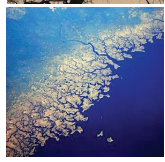
2. This activity may be done for coastline data. The coastline is irregular and jagged, which means it’s a fractal pattern. 

Use this data to draw an irregular coastline that gets more jagged as you zoom in.

3. Another similar activity can be done for the adjoining picture. 

Extension 

Data related to clouds, or mountains, or even river systems can serve as good models for the concept of fractals.


Pages

CH - 2 THE BAUDHĀYANA- PYTHAGORAS THEOREM GANITA PRAKASH PART 2 FIGURE IT OUT QUESTIONS & ANSWERS

 CH - 2 THE BAUDHĀYANA-  PYTHAGORAS THEOREM  GANITA PRAKASH PART 2  FIGURE IT OUT QUESTIONS & ANSWERS 2.1 Doubling a Square Doubling a S...