Friday, July 21, 2023

Class 06 To verify that multiplication is commutative for whole numbers by paper cutting and pasting

 ACTIVITY – WHOLE NUMBERS 

Objective: 

To verify that multiplication is commutative for whole numbers by paper cutting and pasting.

Materials Required: 

Squared paper, colour pencils, a pair of scissors, glue stick, geometry box,etc.

Procedure:

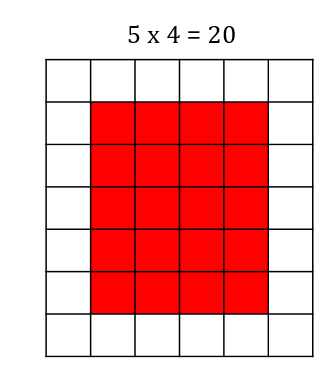
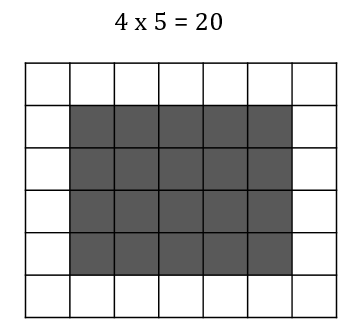
On a squared paper, colour 4 rows and 5columns black as shown.

Similarly, colour 5 rows and 4 columns red as shown. 

ACTIVITY – WHOLE NUMBERS 
3. Cut the two coloured portions and paste them together as shown below.


ACTIVITY – WHOLE NUMBERS 
4. Repeat steps 1 to 3 to multiply 10 and 6. 

ACTIVITY – WHOLE NUMBERS 

Observations:

In figure, there are 4 rows and 5 columns.
 Also, total black coloured squares are 20. 
So, it shows 4 x 5 = 20
2. In figure, there are 5 rows and 4 columns. 
Also, total red coloured squares are 20. 
So, it shows 5 x 4 = 20.
Thus, we have 4 x 5 = 5 x 43. 
Similarly, from figures, we can say that 10 x 6 = 6 x 10.

Conclusion: 

From the above activity, we can say that multiplication of whole numbers is commutative or two whole numbers can be multiplied in any order, the product remains the same.

Do Yourself:

 Verify the commutative property of multiplication of whole numbers by taking the following pairs of whole numbers.
2 and 6
4 and 3
 8 and 3
 5 and 9
7 and 5


Class 06 To verify that addition is commutative for whole numbers by paper cutting and pasting method

 MATHS ACTIVITIES

ACTIVITY – WHOLE NUMBERS

CLASS 6

Based on CHAPTERs

2.WHOLE NUMBERS

6.INTEGERS

7.FRACTIONS

8.DECIMALS


Objective.:

 To verify that addition is commutative for whole numbers by paper cutting and pasting method 

Materials Required: Squared paper, colour pencils, a pair of scissors, glue stick, geometry box, etc. 

Procedure:

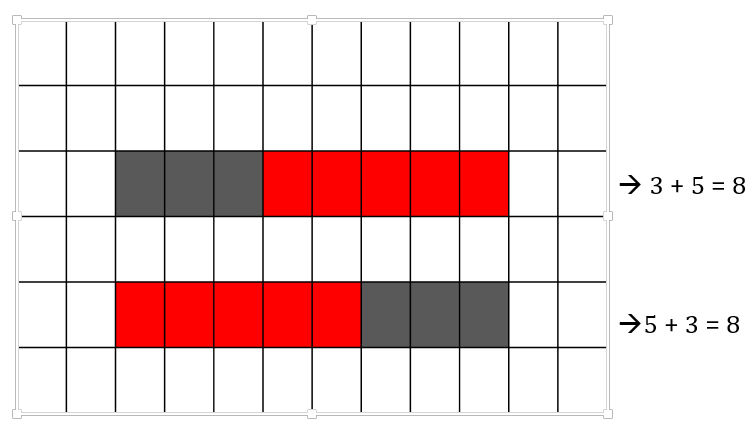
On a squared paper, colour 3 squares black as shown below.


3 + 5= 8

2. In the same row, colour 5 squares red.

In all there are 8 coloured squares.

3. Colour 5 squares red as shown below.


5+3 = 8

4. In the same row, colour 3 squares black. Here also, there are 8 coloured squares.

ACTIVITY – WHOLE NUMBERS

5. Cut out both the coloured strips and paste them together on a sheet of paper as shown below 

ACTIVITY – WHOLE NUMBERS

6. Repeat steps 1 to 5 to add 6 and 9.


ACTIVITY – WHOLE NUMBERS 

Observations:

In step  5, the length of both the strips is same.
In the first strip, there are 8 coloured squares, out of which 3 are black and 5 are red.
So it shows 3 + 5 = 8
2. In the second strip, there are 8 coloured squares, out of which 5 are red and 3 are black.
So it shows  5 + 3 =8.
Thus, we have 3 + 5 = 8 = 5 + 3 
3. Similarly, from figure  10, we can say that 6 + 9 = 9+ 6
Conclusion: 
From the above activity, we can say that, the addition of whole numbers is commutative. i.e. two whole numbers can be added in any order sum remains the same. 

Do Yourself :  

Verify the commutative. property of addition of whole numbers by taking the following pairs of whole numbers
1. 4 and 7 
2. 5 and 8 
3. 6 and 7 
4. 10 and 6 
5. 15 and 3


Class 06 PROJECT 4 SUDOKU

PROJECT 4 - SUDOKU

Instructions: 

You have to fill the number grid, so that every horizontal row, every vertical column and every 3 x 3 box contains digits 1 to 9, without repeating the digits in the same row, column or box. 

You can’t change the numbers already given in the grid.


PROJECT 4 - SUDOKU

Procedure:

We start with the 3 x 3 grid, or row or column, already having maximum numbers.2nd row from the bottom has two missing numbers. These are 2 and 6. We write 6 in the 3rd box from left and 2 in the 8th box. We can't write 2 in the 3rd box, because2 is already written in corresponding column.
2. Next, the first column from right has two missing numbers. These numbers are 8 and9. We write 9 in the 3rd box from top and 8 in the fourth box. We cannot write 8 in place of 9, because 8 is already there in the 3 x 3 grid.
3. Next, the 2nd column from right has two missing numbers. These numbers are 1 and6. We write 1 in the 3rd box from top and 6 in the last box. We cannot write 6 in place of 1, because 6 is already there in the corresponding row.
Next, last 3 x 3 grid has only 1 number missing, which is 8.
5. Next, the first row from bottom has two missing numbers. These numbers are 1 and 9. We write 9 in the 2nd box from left and 1 in the 6th box. We can't write 1 in place of 9, because 1 is already there in the corresponding column.
6. Next, the 3 x 3 grid at left and bottom has one missing number, which is 2. 
7. Next, the 3rd row from top has one missing N8 9number, which is 8.
8. Next, the top left 3 x 3 grid has one missing number, which is 6.
9. Next, the 2nd column from left has one missing number, which is 5.
10. Next, the top middle 3 x 3 grid has two missing numbers, these are 4 and 8.
We write 8 in the 4th column from left and 4 in the 5th column. We can’t interchange these numbers, because 4 and 8 are already there in the 4th and 5th column resp., from left.
11. Next the 4th column from left has one missing number, which is 5.
12. Continuing in this manner, we can fill up all the boxes as shown above.
 

PROJECT 4 – SUDOKU - Solution

Instructions: 

You have to fill the number grid, so that every horizontal row, every vertical column and every 3 x 3 box contains digits 1 to 9, without repeating the digits in the same row, column or box. 
You can’t change the numbers already given in the grid.


PROJECT 4 - SUDOKU
Now, fill up the following number grids: (i)


PROJECT 4 – SUDOKU- solution
Now, fill up the following number grids: (i)


Class 06 Puzzle quiz4 4. Examine the pattern of circles below

 Class 06 Puzzle quiz4 4. Examine the pattern of circles below

PROJECT 3 – PUZZLE QUIZ

4. Examine the pattern of circles below. 

Can you place the numbers one through nine in these circles so that the sum of the three circles connected vertically, horizontally, or diagonally is equal to fifteen?


PROJECT 3 – PUZZLE QUIZ -Solution


4. Examine the pattern of circles below. 
Can you place the numbers one through nine in these circles so that the sum of the three circles connected vertically, horizontally, or diagonally is equal to fifteen?


Geometry: Shapes & Angles,polygons) GL ASSESSMENT QUESTIONS 11 plus exam part -6

 Geometry: Shapes & Angles,polygons) GL ASSESSMENT QUESTIONS 11 plus exam part -6 Comprehensive GL Assessment 11+ Geometry Question Bank...