Thursday, August 10, 2023

Class 08 Activity – Lucky Numbers

 Class 08 Activity – Lucky Numbers

Find all the Lucky Numbers between 1 and 100 as follows.

Procedure 1.

Write down all the numbers  from 1 to 100.  


2. Circle the first number 


The first row will then be 1 2 3 4 5 6 8 9 10
The first number not circled is 2.
Counting from 1, cross out every 2nd number.
The first four rows will then be 

 The first number not circled or crossed out is 3.
Circle this number.
Counting from 1, cross out every 3rd number not crossed out.
The first four rows will then be 


The first number not circled or crossed out is 7.Circle this number.
Counting from 1, cross out every 7th number not crossed out.
The first four rows will then be


5. Continue like this until all the numbers are either circled or crossed out.
The circled numbers are Lucky Numbers.
Investigate Lucky Numbers.
You could look for patterns.
You could investigate the sums or differences of Lucky Numbers.
You could find all the Lucky Numbers which are smaller than 1000.


Class 08 Activity – Algebraic Expressions4

 Class 08 Activity – Algebraic Expressions4

Objective: 

To solve linear equations in one variable by activity method.

Materials Required: 

Thick paper strips of two colours (red and green) of dimensions x cm x 1 cm, thick paper squares of two colours (red and green) of dimensions 1 cm x 1 cm.

Procedure: 

Let us solve the linear equation in one variable 5x-3 = 3x + 5.

Let us represent the linear equation 5x-3 = 3x + 5 using strips and squares.

2. Subtracting (removing) three green strips from L.H.S. as well as from R.H.S.

5x-3x-3 = 3x-3x + 5

2x-3 = 5

The strips and squares in fig. 2 represent 2x-3 = 5


3. Now add three green squares on L.H.S. as well on R.H.S.
(b)2x-3+ 3 = 5 + 3
2x = 8
x = 4
Observations:
Now if we substitute x = 4 in the given linear equation 
5x-3 = 3x + 5, 
we get 5x4-3 = 3 x 4 + 5
20-3 = 12 + 5
17 = 17
Hence, x = 4 is the required solution of the given linear equation which has been solved experimentally and verified.


Class 08 Activity – Algebraic Expressions3

 Class 08 Activity – Algebraic Expressions3

Objective: 

To verify the identity x²-y² = (x + y) (x-y).

Materials Required: 

Some thick sheets of paper (cardboard), scissors, geometry box, sketch pen, pencil, etc.

 Procedure: 

Let us verify the identity x²-y² = (x + y) (x-y) by taking r = 7, y = 4.

On a thick sheet of paper (cardboard), draw a square of side 7 cm. Cut it out.

Area of this piece = 7 x 7 cm² = 7² cm²

2. From one of its corners, cut out a square piece of side 4 cm, as shown in the figure.

Area of the remaining shape = (7² – 4²) cm²


3. Now, cut the remaining shape along the dotted line and rearrange the two rectangles as shown. 
Clearly, the resulting figure is a rectangle of dimensions (7 + 4) cm x (7-4) cm. So, area of this shape = (7 + 4) x (7-4) cm².


But, this-rectangular piece is rearrangement of the piece of area  (7² – 4²) cm²
 [ step 2]
Thus (7² – 4²) = ( 7 + 4) x ( 7-4)cm²
x²- y² = (x + y) (x-y). [ x =7, y=4]

Do Yourself:

Verify the identity, x²-y² = (x + y) (x-y) using the following pairs of numbers:
X = 4, y=3
(ii) X = 6, y = 2
(iii) x= 8, y = 4
(iv) X = 7, y=2
(v) x=10, y=4
(vi) X =9, y =6


Class 08 Activity2 – Algebraic Expressions

 Class 08 Activity2 – Algebraic Expressions

Objective: 

To verify the identity (x-y)² = x² + y² – 2xy.

Materials Required: 

Some thick sheets of paper (cardboard), scissors, geometry box, sketch pen, pencil, etc.

Procedure: 

Let us verify the identity (x-y)² = x² + y² - 2xy by taking x = 6, y = 4.

1. On a thick sheet of paper (cardboard), draw a figure as shown below. This shape is a combination of two squares, one with side 6 cm and other with side 4 cm. Using scissors, cut it out. Area of this shape = (6² + 4²) cm²


2. From the above piece, cut out a rectangle of size 6 cm x 4 cm, marked as I in the figure. 
Area of piece I = (6 x 4) cm².
3. From the remaining shape, cut out a rectangle of size 6 cm x 4 cm, marked as II in the figure.
Area of piece II = (6 x 4) cm²
4.Finally, you are left with a square piece of side = (6 -4) cm = 2 cm Area of this shape = (6-4) x (6 – 4)= (6-4)² cm²


5. Area of the shape in fig. 1 = (6² +4²) cm² 
Area of the shape after cutting out I =  (6² + 4²) –  (6 x 4) 
Area of the shape after cutting out II  
= (6² + 4²) –  (6 x 4) - (6x4) 
= [6² + 4² – 2 x (6x4)] cm² 
But, after cutting out II, you are left with a square piece of
 area (6 - 4)² cm² 
Thus, (6-4)² = 6² + 4² – 2 x (6 x 4)
 (x-y)² = x² + y² – 2xy [Q x = 6, y = 4]

Do Yourself:

Verify the identity (x-y)² = x² + y² – 2xy for the following pairs of numbers:
(i) x = 3, y = 1 (ii) x = 5, y = 2
(iii) x = 7, y = 5 (iv) x = 8, y = 3


Class 08 Activity – Algebraic Expressions

 Activity – Algebraic Expressions

Objective: 

To verify the identity (x + y)² = x² + y² + 2xy.

Materials Required: 

Some thick sheets of paper (cardboard), scissors, geometry box, sketch pen, pencil, etc.

Procedure: 

Let us verify the identity (x + y)² = x² + y² + 2xy for x = 5, y = 3

On a thick sheet of paper, draw two squares one with side 5 cm and another with 4.side 3 cm. Using scissors, cut them out.

2. On another thick sheet of paper, draw two rectangles each with dimensions5 cm x 3 cm. Using scissors, cut them out.


Activity – Algebraic Expressions
3. Now, arrange the four pieces in such a way that the resulting figure becomes a square as shown in the figure.
4. We see that the resulting figure is a square of side (5+3)cm.
Area of the resulting square  = (5 + 3)² cm²
Also, area of piece I = 5 cm x 5 cm = 5² cm² 
area of piece II = 3 cm x 3 cm = 3² cm²
area of piece III = 5 cm x 3 cm = (5 x 3) cm² and 
area of piece IV = 5 cm x 3 cm = (5 x 3) cm² 


Thus, area of the resulting piece = area of the four pieces.
 (5 + 3)² = 5² + 3² + (5 x 3) + (5 x 3)
(5 + 3)² = 5² + 3² + 2 x (5 x 3)
 (x + y)² = x² + y² + 2xy {Q x = 5, y = 3]

Do Yourself:

Verify the identity (x + y)² = x² + y² + 2xy for following pair of numbers:
x = 4, y = 2 (ii) x = 3, y = 6
(iii) x = 5, y = 4 (iv) x = 7, y = 8


Tuesday, August 8, 2023

Class 08 Activity – Cube and Cube roots

 Based on CHAPTERs 7. Cubes and cube roots 16. Playing with numbers 9.Algebraic Expression 14.Factorization 2.Linear Equation in one Variable

Activity – Cube and Cube roots

 Objective : 

To find the cube of a number by paper folding.

Materials Required:

 A chart paper and a pair of scissors.

Procedure :

Any rectangular piece of paper represents the base. The number of times the paper is folded represents the exponent of the base.
2. To find the cube of 2, take a chart paper and fold it into two equal parts along the length and then along width. Again, fold it into two parts along the length.
3. You have folded the chart paper three times that represents 2³. Unfold it and cut along the folds. You will get 8 pieces i.e., 2³.


4. To find the cube of 3, take another chart paper and fold it into three equal parts as given in the figure.
5. Now, fold along the width, dividing it further into three equal parts.
6. This time fold it along the length, dividing it further into three equal parts.
7. Now unfold the rectangular sheet and cut along the folds, you will get 27 equal pieces, i.e., 3³
In this way you can find the cube of any number by folding a paper.


Class 08 PUZZLES

 PUZZLES 

I have two digits. I am a square. I am also a cube. What number am I? 

2. I am a two digit number. I am the square of the sum of my digits. What number am I?

3. The sum of the squares of six consecutive whole numbers is 1111. Find the six whole numbers. 

4. Great Grandmother wouldn't tell when she was born. She did say that she was A years old in the year A? What year was she born? (Hint: A is between 40 and 50)

5. The difference of the squares of two consecutive even numbers is 20. What are these even numbers? 

I have two digits. I am a square. I am also a cube. What number am I? 


Solution : 


64 = 8² = 43
2. I am a two digit number. I am the square of the sum of my digits. What number am I?
Solution : 81 = (8+1)² = 9²
3. The sum of the squares of six consecutive whole numbers is 1111. Find the six whole numbers. 
11² + 12² + 13² + 14² + 15² + 16² = 121+144+169+196+225+256=
4. Great Grandmother wouldn't tell when she was born. She did say that she was A years old in the year A²? What year was she born? (Hint: A is between 40 and 50)
Solution: 49 ( because only square number 49 is between 40 &50)
5. The difference of the squares of two consecutive even numbers is 20. What are these even numbers? 
Solution: 6² - 4² =  36 – 16 = 20

Class 08 GENERAL SQUARING BY VEDIC MATHEMATICS

 Class 08 GENERAL SQUARING BY VEDIC MATHEMATICS

The Duplex 

We will use the term Duplex, D, as follows: 

For 1 digit number D is its square, e.g., D (4) = 42 = 16 

 For 2 digit number D is twice the product of two digits

 e.g., D (43) = 2 x 4 x 3 = 24 

Now, find the Duplex of: 5, 23, 55, 26,90

The square of any number is just the total of its Duplexes, combined in the way we have been using for mental multiplication. 

43² = 1849.

Working from left to right there are three duplexes in 43: 

D (4), D (43) and D (3).

D (4) = 16, D (43) = 24, D (3) = 9,

Combining these three results in the usual way we get: 16 
16,24 = = 184
184,9 = 1849. 
2. 64² = 4096. D (6) = 36, D (64) = 48, D (4) = 16, 
Combining these results we get: 36 
36,48 = 408
408,16 = 4096 
Now, find the square of: 31, 14, 41, 32, 66, 81, 91, 56, 63

Class 08 Activity – Happy Numbers

 Class 08 Activity – Happy Numbers

A happy number is one for which the sum of the squares of its digits ends in 1 after repeated squaring and adding as shown below. Is 13 a happy number? 

1² + 3² = 10 and then 1² + 0² = 1. 

Yes, 13 is a happy number. 

Sometimes many repetitions are necessary.

Is 44 a happy number?

4² + 4² = 3² and 3² + 2² = 13 and 1² + 3² = 10 and 1² + 0² = 1. Yes.

Is your house number a happy number?

Is your telephone number a happy number?

Is your birthdate a happy number?

Is today's date a happy number?

A happy number name, or word, is found by giving each letter of the alphabet a number, i.e.,

A B C D …... Z

1 2 3 4 …… 26

Is MATHS a happy number word?

MATHS is 13 1 20 8 19.

13² + 12²+ 202+8² + 19² = 995

 and 9² +9²+ 5² = 187 etc. 

Continue to find whether MATHS is a happy number word.

Which days of the week are happy number days? 

Which months of the year are happy number months?

Is your name a happy number word? 

Is the name of your city or town or district a happy number name?


Class 08 Activity – Dividing Square roots

 Class 08 Activity – Dividing Square roots


Objective:

 Dividing square roots.

Procedure: 

Let the children note the following geometrical patterns. and deduce       

                                        1 = 1²

    1 + 3 = 2²


1 + 3 + 5 = 3²


     1 + 3 + 5 + 7 = 4²


1 + 3 + 5 + 7 + 9 = 5²


  1 + 3 + 5 + 7 + 9 + 11 = 6²


     1 + 3 + 5 + 7 + 9 + 11 + 13 = 7²


This geometrical pattern verifies that the sum of the first n odd numbers is n²? 
Conversely, any square number can be decomposed into the sum of a number of odd natural numbers. If a given number can be expressed as the sum of first n natural odd numbers, then the number must be the square of the number n, which will accordingly be the square root of the given number. This fact can be used to find the square root of small numbers. 
To find the square root of any number, we subtract from it consecutively 1,3,5,7,9,11, …..
The number times we have to subtract to get 0, gives the square root of the given number. 

Here the procedure is shown for 81 and 110. 
From 81, we have to subtract the first 9 odd natural numbers, to get 0.Therefore, square root of 81 is 9. 
From 110, we have to subtract first 10 odd natural numbers and we cannot subtract the first 11 odd natural numbers. 
Thus, 110 is not a square number and its square root lies between 10 and 11.


Class 08 Activity – Square root of 2 (approximate)

 Activity – Square root of 2 (approximate)

Observations:

OA = AB (1 unit each)

2. ∆OAB is a right triangle.

OB2 = OA2 + AB2 (By Pythagoras Theorem)

OB2 = (1)2 + (1)2

OB2 = 2 units

 OB = √2 units.

3. From the number line, OC = √2 units (∵OB = OC).

4. On reading from the number line, OC = 1.4 units.

5. = 1.4 (correct to one place of decimal).


Wednesday, August 2, 2023

Class 08 Activity – Square of a 3 digit number

 Activity – Square of a 3 digit number

PROJECT

Objective: 

To find the square of a 3-digit number using diagonal method.

Materials Required: 

Drawing sheets, sketch pens, geometry box, etc.

Procedure:

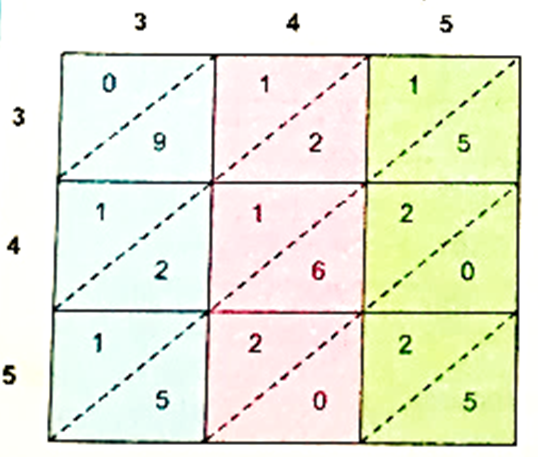
Let us find the square of 345.

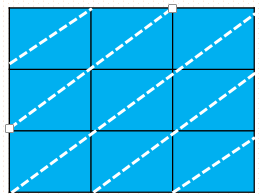
Write down the digits 3, 4, 5 in the 3 x 3 square as shown in figure.

2. Now, join the diagonals of all the small squares with the dotted lines as shown in figure. 


3. Multiply each digit on the 1st column of the squares with digit on the row and write the products in the 1st column. Colour them as shown in figure. We write the tens digit on the upper half and ones digit on the lower half of the diagonals. 
4. Complete the squares by multiplying the elements of each column as shown in figure.
5. Starting from the lower square, add the numbers diagonally as shown in figure. 


6. Add the sum of the digits along the diagonal. If the result of addition comes in two digits, add the carry over to the next diagonal. Thus, the square of 345 = 119025
II. Now, let us find the square of 3497. Thus, the square of 3497 = 12229009.


Class 08 Activity – Relationship between the side length and the area of the square.

 Activity – Relationship between the side length and the area of the square.

objective: 

To investigate several squares with different side lengths and review the relationship between the side length and the area of the square.

Procedure: 

Give students the following square pattern and ask them to study the pattern.
If this pattern were to continue, for any number of tiles on the side of a square, we should know what number of tiles is needed to build the entire area of the square. 

Fill in the table below:
How many tiles would be on the side if there are 324 tiles in the area?

How many tiles would be on the side if there are 841 tiles in the area?
Based on what you learned, what is the relationship between the length of side of a square and itself area ? 
If you know the area, how do you find the length of a side?


Class 08 Activity – Exponents and powers

 Activity – Exponents and powers

Objective: 

To find the values of 20, 21, 22 by paper folding activity.

Materials Required:  

Few rectangular paper cutouts, scale, pencil

Preparation for the Activity:

The rectangular pieces of paper represent the base 2.

2. Number of times the rectangular pieces will be folded that will represent the power

Demonstration and Observation:

Take a rectangular piece. This is not folded. So, it is folded zero time.

2. Now take another piece of paper. Fold it into two equal parts along the length. Here, the fold has been made one time. Open the paper. We find two equal parts.


3. Take another piece of paper and first fold it into two equal parts along the length as done in step 2. 
Then, similarly fold it once more along the width. 
We have folded the paper two times. Open the paper. 
We find 4 equal parts of rectangles. Make lines along with it.
Two be Draw the line segment among the creases to get 4 such rectangles.
4. Take another piece of paper and first fold it as done in step 3. 
Then once again fold it along the breadth. We folded the paper three times. 
Open the paper and count the number of equal rectangles.
 Draw the lines along with the creases to get 8 equal rectangles.
 Keep on folding to get further results.


Class 08 Activity – Rational numbers

 Activity – Rational numbers

Objective: 

To show that every rational number 𝑝/𝑞 can be represented on the number line.

Materials Required: 

A drawing sheet, a compass, a scale, a pencil, an eraser, etc.

Let us represent the rational number 17/7 on the number line.

Procedure: 

Draw a number line on the drawing sheet with the help of a scale.

Represent the integer 17 on it.

 Let the point P represent 17. 

1. Divide the segment OP into 7 equal parts.

2. Let us name the first point on the right of O as A. OA represents one-seventh of 17 or 17/7 units. 

Thus, A represents the rational number 7. on the number line.


II. Now let us represent the rational number (−9)/4 on the number line.
Draw a number line.  Represent - 9. (on the left of 0) on the number line. Let the point Q represent the integer -9.  Now divide the segment OQ into four equal parts.
2. Let us name the first point on the left of O as B. 


OB represents one-fourth of OQ, i.e., 1/4of-9 or (−9)/4units.
Thus, the point B represents the rational number (−9)/4  on the number line.
 Similarly, other rational number can be represented on the number line. 
Thus, every rational number can be represented on the number line,  as a line segment can be divided into any number of equal parts.


Class 07 Puzzles - Triangles

 Puzzles - Triangles

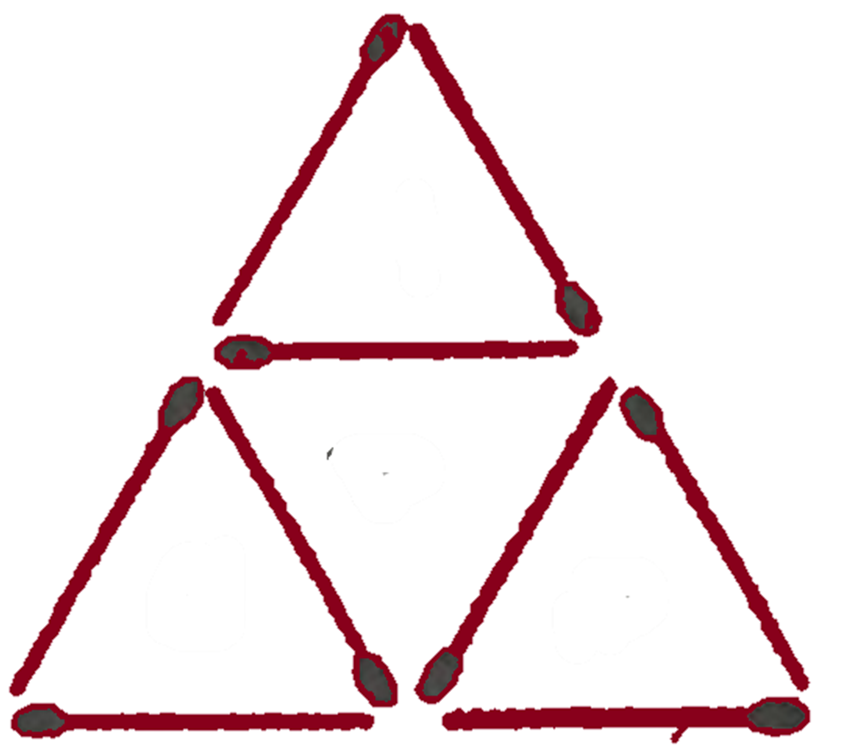
1. Here 9 matchsticks have been used to form four congruent triangles. Now arrange only 6 matchsticks to four congruent triangles.


Puzzles – Triangles - Solution
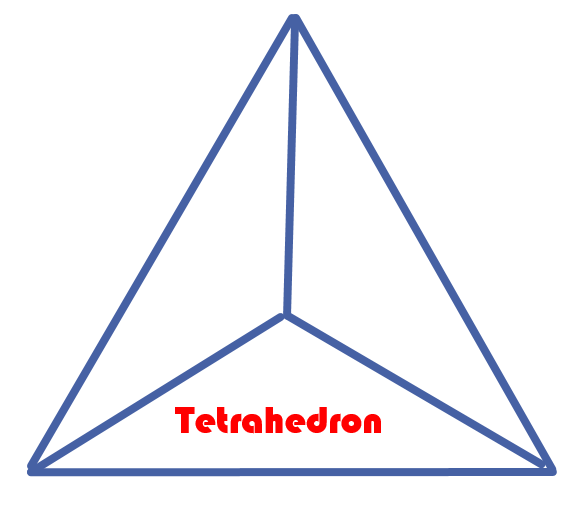
1. Here 9 matchsticks have been used to form four congruent triangles. Now arrange only 6 matchsticks to four congruent triangles.  Tetrahedron


2. Here 12 matchsticks have been used to enclose an area of 9 squares. Draw four diagrams toshow how 12 matchsticks can be used to enclose areas of 8, 7, 6, and 5 squares.

2. Here 12 matchsticks have been used to enclose an area of 9 squares. Draw four diagrams to show how 12 matchsticks can be used to enclose areas of 8, 7, 6, and 5 squares.


Pages

CH - 2 THE BAUDHĀYANA- PYTHAGORAS THEOREM GANITA PRAKASH PART 2 FIGURE IT OUT QUESTIONS & ANSWERS

 CH - 2 THE BAUDHĀYANA-  PYTHAGORAS THEOREM  GANITA PRAKASH PART 2  FIGURE IT OUT QUESTIONS & ANSWERS 2.1 Doubling a Square Doubling a S...