Wednesday, August 2, 2023

Class 07 Pencil Puzzles

 Pencil Puzzles

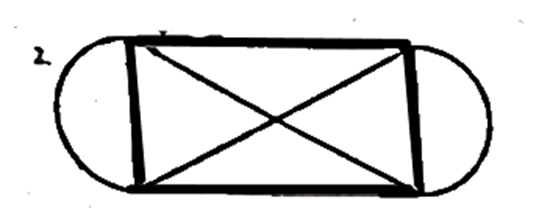
Can you draw these figures without lifting your pencil off the paper? You are not allowed to retrace any lines but you can cross over lines

3

4
5
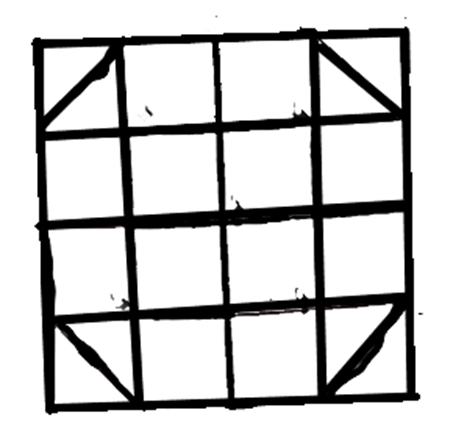
6
7
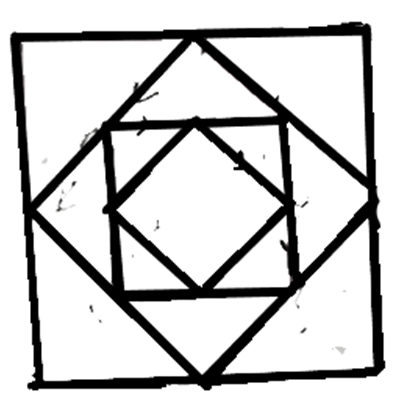
8
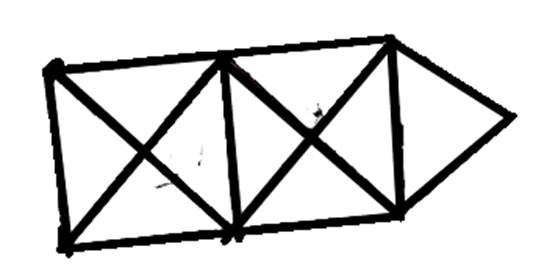

Pencil Puzzles - solution
Can you draw these figures without lifting your pencil off the paper? You are not allowed to retrace any lines but you can cross over lines
Solution:
Figure 1: yes. Start any vertex and complete it at other end. (All even vertices)
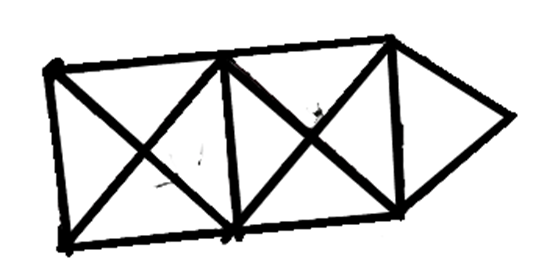
Figure 2: yes, Start at any even vertices and complete it at other end. ( All even vertices)
Figure 3: yes, Start at any even vertices  and complete it at other end. (All even vertices)
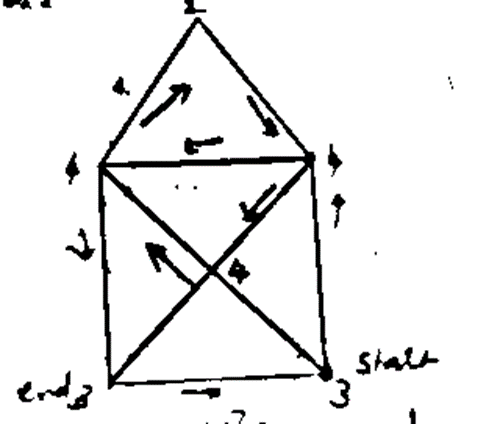
Figure 4: yes, Start at any odd vertex (3) and complete it at other end. (it has exactly 2 odd vertices)


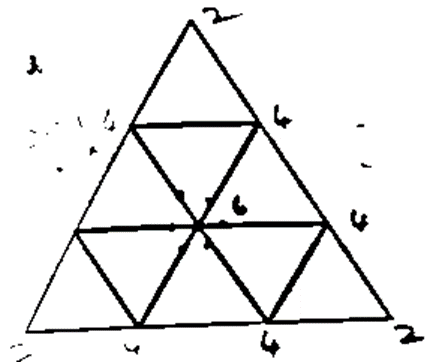

Can you draw these figures without lifting your pencil off the paper? You are not allowed to retrace any lines but you can cross over lines
Solution:
Figure 5: no, It has more than 2 odd vertices.
Figure 6: yes, Start at any even vertices and complete it at other end. ( All even vertices)
Figure 7: yes, Start at any even vertices (4) and complete it at other end. (All even vertices)
Figure 8: no, It has more than 2 odd vertices.






Class 07 Grid Game

 Grid Game 

A game for 2 players.

Materials Required: 

A4 x 4 grid.

8 counters, 4 of one colour for one player, 4 of another colour for the other player.

Method: 

The counters are placed on the grid as shown.

The players take it in turn to move their counters. 

At each turn, only one counter may be moved horizontally or vertically, one square at a time. 

They may not be moved diagonally.

The winner is the first player to position 3 of his or her counters beside each other, either horizontally, vertically or diagonally.


Class 07 Circle Game

 Circle Game 

 A game for 2 players.

Materials Required:

 The diagram shown, drawn on a piece of paper. blue pen for one player, a black pen for the other.

Method: 

The players take it in turn to colour a circle. 

The winner is the first player to have1 a coloured three connected circles.


Class 07 Counter Game 2

 Counter Game 2

 A game for 2 players.

Materials Required: 

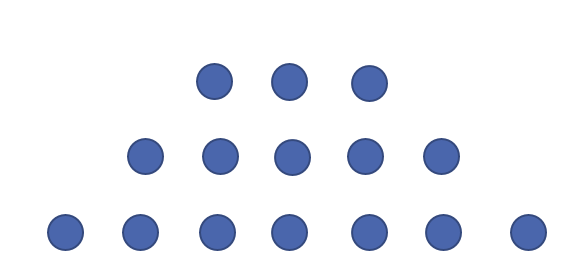
15 counters set out with 7 in one row, 5 in another and 3 in the other.

The Play:

 Players take turns to remove any number of adjacent counters from any single row.

The winner is the player to remove the last counter.


Class 07 Counter Game

 Counter Game 

A game for 2 players.

Materials Required: 

Two piles of counters. There may be any number of counters in each pile.

Method: 

Each player, in turn, removes one or more counters from just one of the piles.

The loser is the player who is forced to take the last counter.


Class 07 Group Activity-bar graph

 Class 07 Group Activity

Objective: 

To gather information about  preference for some particular soft drinks among the Students of a class and draw a bar graph.


Materials Required: 

Graph paper, pencil, ruler.

1.The students go around and ask each of their classmates, which soft drink they like most.. Accordingly, a tally mark is put at the column of that soft drink.

2. The students count the preference for each soft drink and enter the value in the frequency column.

3. Now, the students take a graph paper each, and draw the x-axis (horizontal axis) at the bottom of the paper and y-axis (vertical axis) at the left side of the paper. The point of intersection is marked as O. Let the x-axis represent the soft drinks and the y-axis the number of students. Here, each sq cm represents one child.


4. Then they draw the bar graph. Also, they must calculate the fraction, decimal, and percentage for each soft drink.

Observations:


Scale: __________________ Title: ---------------------------

Do yourself:

Make a table as given above and draw the bar graphs for the following:
The marks obtained in mathematics by any 5 students of your class.
2. The heights of any 5 students of your class.
3. The weights of any 5 students of your class.

Class 07 Mathematical Game 2

 Mathematical Game 2

Two players can play this game using a 1 rupee coin. One player is heads and other player is tails. Toss the coin alternately. If heads tosses the coin and the head comes up, the score is 1 point. If it is tail, score no points. Tails tosses next and only scores a point if the coin shows tail. The first player to score 10 points is the winner. Record your score in a table. 


Play this game 10 times.

How many time did heads win?

(ii) How many times did tails win?

(iii) Do you think this game is a fair game? Note that a game is fair if each player has equal chance of winning.

Play this game with your friends using a 6-sided dice. 
Name one player as under 4 and other player as above 4. 
Throw the dice alternately. 
Under 4 throws first. If the dice shows a number less than 4, the score is 1 point. 
If it is greater than 4, score no points. Similarly, above 4 throws next and scores 1 point if the dice shows a number greater than 4. 
The first player to score 5 points is the winner.
Record your scores in a table.
Play this game 10 times.
How many games did under 4 win?
(ii) How many games did above 4 win?
(iii) Do you think this game is a fair game?
(iv) How could you change the rules of the game to make it fair?


Class 07 Project : Value of 𝝅

 Project : Value of 𝝅

Objective: 

To find the value of it by activity method.

Materials Required: 

Coloured paper, geometry box, different coloured threads, a pair of scissors, sketch pens, fevicol, etc.

Principle:

 1. 𝝅 is defined as the ratio of circumference and diameter of a circle,

 i.e., 𝝅  = "Circumference" /"Diameter"  

2. 𝝅 is an irrational number.

3. For practical purposes we take the value of 𝝅  as 𝟐𝟐/𝟕 or  3.14 ... (approx.)

Procedure:

1. Take a coloured paper and draw five circles with different radii. Name them as A, B, C, D and E as shown in Fig.


2. Cut the circles A, B, C, D and E from the coloured paper.
3. Take a coloured paper and fix a thread on it with fevicol and mark its end points as P and Q as shown in Fig. 


4. Take a circle and put a mark on the circumference 
of it as shown in Fig. 


5. Now place the circle on the thread in such a way the mark touches the point P as shown in Fig. 


6. Now roll the circle along the line PQ, till the mark touches the thread again, mark this point X, as shown in Fig. 


7. Measure the distance PX with the help of a ruler and denote it by C.
8. Calculate the diameter of the circle and denote it by d.
9. Take the ratio "C" /"d"  to calculate the value of 𝝅.
10. Repeat the steps from 5 to 9 for other circles and record your observations.

Observations : 


2. Average value of 𝝅 is _________
3. The length of the thread gives the ____________of the circle.

Class 07 Activity – 3 Congruence of triangles

 Activity – 3 Congruence of triangles

Objective: 

To establish the congruency of triangles by making paper models and superimposing.

Materials Required : 

Paper, pencil ruler and scissors. 

Procedure:

Draw two triangles PQR and LMN where PQ = LM, PR = LN, and ∠P = ∠ L. Cut out these triangles 

1. Overlap PQ of triangle I with LM of triangle II. It will coincide exactly as they are equal.

2. Overlap ∠ P on to ∠ L. They too will coincide as their measures are equal.

3. Now, since PR and LN are equal, they will coincide exactly and the open end of PR will coincide with ∠ N.
4. This means that QR and MN too will fall along each other. Thus triangle I coincides with triangle II.
Observations: Record your observations in the following table.


Conclusion: 

From the above activity, it is verified that if two sides and the included angle of one triangle respectively are equal to two sides and the included angle of another triangle, the triangles are congruent.

Class 07 Activity – Area of Circle

 Activity – Area of Circle

Objective: 

To verify the formula for area of a circle. Or to verify the following formula.

Area of a circle = 𝜋 x (radius)²

Materials Required: 

Thick sheets of paper, colour pencils, a pair of scissors, glue stick, geometry box, etc.

Procedure:

On a thick sheet of paper, draw a circle of any convenient 

radius. Colour one-half of the circle. Using a pair of scissors, 

cut it out.

2. Divide the circular cutout into eight equal parts. This can be done by drawing two pairs of perpendicular diameters. Using a pair of scissors, cut out the sectors along the radii.


3. Arrange the 8 sectors of the circle as shown below, which is roughly a parallelogram.


4. Repeat step 1. Now, divide the circular cut out into 16 equal parts. Using a pair of scissors, cut out the sectors along the radii.
5. Arrange the 16 sectors of the circle as shown below.


6. Repeat the procedure. As we go on increasing the number of sectors, the length of arcs go on decreasing. The more the sectors we have the nearer we reach a rectangle.


Observations:

 1.In figure , AB = CD = radius of the circle.
 Also the whole circle is divided into 8 sectors and oneach side there are  4 sectors. The length of the parallelogram is the length of 4 sectors, which is half of the circumference of the circle. 

2. Similarly, in figure, AB = CD =  radius of the circle  and the length of the parallelogram is equal to half of the circumference of the circle.

3. In figure, AB = CD = Breadth of the rectangle ABCD = radius of the circle and BC =  AD = length of the rectangle, which is half of the circumference of the circle. 
Area of the circle = area of the rectangle 
= length x breadth
= 1/2 x 2 𝜋 r x r , where r is the radius of the circle.
= 𝜋 r²

Conclusion: 

From the above activity, it is verified that 
area of a circle= 𝜋 x (radius)² 

Do Yourself: 

Draw a circle of radius 5 cm. Verify the formula for area of a circle by paper cutting and Pasting method.


Class 07 Activity – Area of Parallelogram

Activity – Area of Parallelogram 

Objective : 

To verify the formula for Area of a parallelogram or to verify the following formula. Area of a parallelogram = base x height

Materials Required : 

Squared paper, colour pencils,  a pair Of scissors, glue stick, geometry box, etc.,

Procedure:

On a  squared paper, draw a parallelogram ABCD. Draw. DE (height corresponding to the base AB). Shade the two parts using different colours.

2. Using a pair of scissors, cut out the triangle ADE.

3. Paste the triangular cutout ADE to the right side of BCDE such that AD and BC coincide.


Observations: 

In figure, we see that the resulting figure becomes a rectangle. 
So, area of the parallelogram = area of the rectangle = length x breadth
= CD X DE
= AB X DE  [AB = CD, opposite sides of a parallelogram are equal]
= Base x height 

Conclusion: 

From the above activity we find that Area of a parallelogram = base x height

Do Yourself: 

Draw three different parallelograms on squared papers. In each case, verify the formula for area of a parallelogram by paper cutting and pasting.


Saturday, July 29, 2023

Class 07 Project : Visualizing solid shapes

 Project : Visualizing solid shapes

Objective: 

Drawing cubes and cuboids.

Materials Required: 

Some sheets of isometric dot paper, sketch pen, pen, pencil, etc.

Procedure:

 I. To draw a cube of given dimensions (say a cube of edge 3 cm)

(In an isometric drawing, the measurements also agree with those of the solid.)

Take an isometric dot paper and draw two line segments AB and BC as shown below. 

Since the edge of the cube is 3 cm, we join four dots along each line to get the length of each line as 3 cm.

2. Now, draw three vertical lines AD, BE and CF as shown below. Here again, we join 4 dots along each line to get the length of each line as 3 cm.
3. Finally, join DE, EF. Also, draw DG || EF and FG || ED. The solid so obtained is a cube of edge 4 cm. Using a ruler measure each edge of the cube and verify.


You can also draw the cube by interchanging the steps 1 and 3 as shown below.


II. To draw a cuboid of given dimensions (say a cuboid of 4 cm x 2 cm x 3 cm)
1. Take an isometric dot paper and draw two line segments AB and BC as shown below. Here AB = 4 cm and BC = 2 cm. 
2. Now, draw three vertical line segments AD = BE = CF = 3 cm as shown below.
3. Finally, join DE and EF. Also, draw DG || EF and 
FG || ED. The solid so obtained is a cuboid of dimensions 4 cm x 2 cm x 3 cm. Measure each edge of the cuboid and verify.


Class 07 ACTIVITY 2 – TRIANGLES- Pythagoras Theorem

 ACTIVITY 2 – TRIANGLES- Pythagoras Theorem

Objective: 

To verify the Pythagoras theorem by paper cutting and pasting method.

Materials required: 

Squared paper, Colour pencils, a pair of scissors, glue stick, geometry box etc.,

Procedure:

1. On a squared paper, draw a right triangle ABC, right angled at B.

2. Draw squares on each side of the triangle as shown below.


3. Locate the centre of the square drawn on the longer leg of the ∆ABC. Mark it as 0. Draw DE ∥ AC, which passes through O. Draw FG such that ∠FOD = 90 °.
4. Cut out the square on side BC and the four pieces of the square on side AB.


5. Paste these five pieces over the square on the side AC as shown below. 

Observations:

In figure 5, we see that the square on side BC and the square on side AB (four pieces)completely cover the square on side AC. Or square on side AC = square on side AB + square on side BC. Or 
AC2 = AB2 + BC2

Conclusion: 

From the above activity, we can say that in a right triangle, the square on the hypotenuse is equal to the sum of the squares on the other two sides. 

Do Yourself: 

On a squared paper, draw two different right triangles. In each case verify the Pythagoras theorem by using the paper cutting and pasting method.


Class 07 ACTIVITY – TRIANGLES- Pythagoras Theorem

 ACTIVITY – TRIANGLES- Pythagoras Theorem

Objective: 

To verify the Pythagoras theorem by using a squared paper and shading the squares.

Materials Required: 

Squared papers, colour pencils, geometry box, etc.

Procedure:

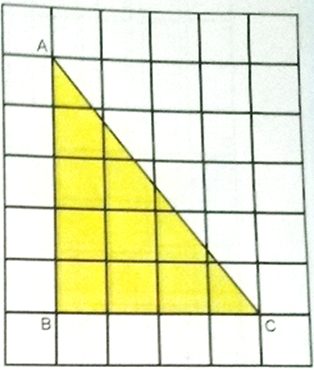
On a squared paper, draw a right triangle ABC whose legs 

(sides forming the right angle) are 3 cm and 4 cm,

 i.e.,(AB = 3 cm and BC = 4 cm. 

Measure the side AC of ∆ABC.

It is 5 cm. 

Shade the triangular region ABC. 

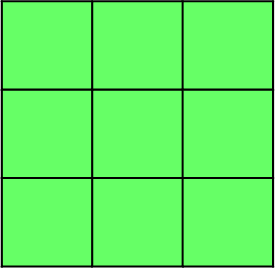
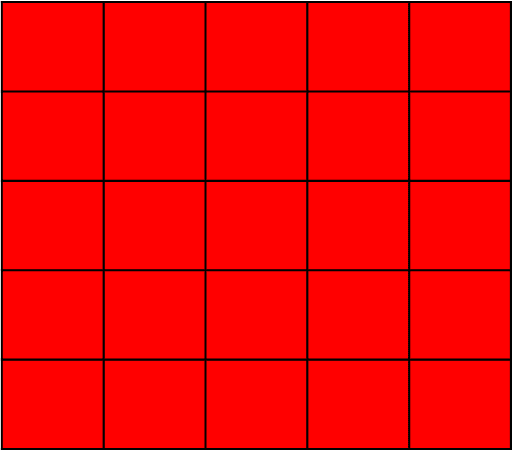
2. On another squared paper, draw three squares

 having sides 3 cm, 4 cm and 5 cm. 

Shade each square using different colours and cut them out.


3. Paste these squares along the sides of triangle ABC such that one side of square (a) (green coloured) falls along AB, one side of square (b) (blue coloured) falls along BC and one side of square (c) (red coloured) falls along AC.


Observations : 

In figure,
area of the square on side AB = number of small squares inside the square on AB = 9 cm2
Area of the square on side BC = number of small squares inside the Square on BC = 16 cm2
Area of the square on side AC = number of small squares inside the Square on AC = 25 cm2


We find that 9 + 16 = 25 or area of the square on side AB + area of the square on side BC = area of the Square on side AC or AB2 + BC2 = AC2

Conclusion

From the above activity, we can that in a right triangle, the square on the hypotenuse is equal to the sum of the squares on other two sides.

Do Yourself: 

on a squared paper, draw the following right triangles (a) AB = 8 cm, BC = 6 cm, ∠ B = 90 °

(b) PQ = 5 cm, QR = 12 cm, ∠ Q = 90 °

In each case, verify the Pythagoras theorem by shading the squares.


Pages

CH - 2 THE BAUDHĀYANA- PYTHAGORAS THEOREM GANITA PRAKASH PART 2 FIGURE IT OUT QUESTIONS & ANSWERS

 CH - 2 THE BAUDHĀYANA-  PYTHAGORAS THEOREM  GANITA PRAKASH PART 2  FIGURE IT OUT QUESTIONS & ANSWERS 2.1 Doubling a Square Doubling a S...