Sunday, May 25, 2025

Class 6 NCERT bridge course Answers Activity W4.3 shapes found around us.

 Activity W4.3- shapes found around us.  

Give children stamps of square and rectangular shapes found around us. 

Ask them to paste on a grid and calculate the number of grid squares covered by each one of them.


Activity W4.3 – Area Using Objects

Activity W4.3: Area Using Everyday Shapes

Give children **stamps or cutouts** of square and rectangular shapes from everyday objects (like books, boxes, tiles, etc.). Ask them to paste these on a **square grid sheet** and calculate the number of grid squares covered by each shape.

Example Images:

Children will place rectangular objects on a grid like this

Example: A matchbox covering 4 squares (2 × 2)

Step-by-Step Activity:

  1. Provide children square grid paper and shape cutouts.
  2. Children paste the shape on the grid.
  3. They count how many full squares it covers.
  4. Record and tabulate their answers.

Examples:

Example 1:
A square stamp covering 3×3 squares.
Area = 3 × 3 = 9 square units
Example 2:
A book cutout covering 5 rows and 2 columns.
Area = 5 × 2 = 10 square units
Conclusion:
The area of any square or rectangle is calculated by multiplying the number of grid squares along its length and width.
Area = Length × Breadth


By counting Squares for area
ABCD = 3 X 4 = 12 SQ UNITS
EFGH = 2 X 6 = 12 SQ UNITS
IJKL = 6 X 2 = 12 SQ UNITS
MNOP = 12 X 1 = 12 SQ UNITS
QRST = 1 X 12 SQ UNITS
UVWX = 4 X 3 = 12 SQ UNITS


Class 6 NCERT bridge course Answers Activity W4.4 Exploring Area Through Real-Life Objects

 Activity W4.4

 Exploring Area Through Real-Life Objects

Children may be asked to observe different objects such as books, Notebooks, the floor of the room etc. and try to device ways to find their areas.

Activity W4.4 — Exploring Area Through Real-Life Objects

Objective:

To help children understand the concept of area by observing and estimating the area of everyday rectangular and square objects.

Instructions:

Ask children to:

  1. Observe objects around them (like books, notebooks, classroom tiles, tables, etc.).

  2. Measure or estimate the length and breadth of the objects.

  3. Use the Area = Length × Breadth formula to find the area.

  4. Record their observations and compare different objects.

Examples:

ObjectEstimated LengthEstimated BreadthArea (L × B)Unit
Textbook25 cm18 cm450cm²
Notebook20 cm15 cm300cm²
Floor Tile60 cm60 cm3600cm²
Writing Table Top100 cm50 cm5000cm²
Expected Learning Outcome:

Children will understand:

  • How to measure or estimate dimensions.

  • That different objects can have the same area but different shapes.

  • That area is a measure of how much surface an object covers.

Extension Idea:

Encourage kids to:

  • Draw their objects on graph paper.

  • Create a mini "Area Museum" where they paste cutouts of real items with calculated area.

Activity W4.4 - Area Explorer

Activity W4.4 - Area Explorer Game

Instructions:

Drag the shapes onto the grid to simulate measuring area of books, notebooks, etc.

Each grid square = 1 unit². Use the shapes below to represent real-life objects.

2x1
3x2

Class 6 NCERT bridge course Answers Activity W4.2 Identifying Properties of Squares and Rectangles for Finding Area

 Identifying properties of squares and rectangles for finding area 

Activity W4.2  

 Identifying Properties of Squares and Rectangles for Finding Area

Initially a game can be played in this way: 

 Make chits numbered from 1 to 12 and put them in a bag. 

 Give each child a sheet of square grid paper. 

 One child becomes the leader and picks up two chits and shows them to the others. 

Level 1: 

The rest have to draw the rectangle of those sides in their own square grid paper. 

It can be vertical or horizontal. 

 Suppose the numbers are 2 and 5. 

 Others will draw rectangles of sides 2 units and 5 units. 

Or 5 units and 2 units. 

One such could be - 

The aim is to fill the square grid. 

Level 2: 

The rest can think of the area and decide what sides they want to draw, e.g., 

if the numbers pulls out are 2 and 6, 

the children can draw either a rectangle 2 by 6 or 3 by 4 or 12 by 1. 

They may check if all these shapes cover the same area or not. 

Level 3: 

If the numbers pulled out are 2 and 8, the children can draw either 2 by 8, 4 by 4 or 1 by 16. 

Once they make different shapes, they can check whether all areas are the same or not. 

Through this activity, the students can generalise that, 

the area of a rectangle/square is the product of adjacent sides


Activity W4.2 – Identifying Properties of Squares and Rectangles for Finding Area

Objective

To help students explore and generalize that the area of a rectangle or square is the product of adjacent sides, using hands-on practice with grid paper.

Materials Needed

  • Square grid paper

  • Pen/Pencil

  • Chits numbered 1 to 12

  • A bag or box to draw chits from

How to Play

Preparation:

  1. Write numbers 1 to 12 on individual chits and put them in a bag.

  2. Each student gets a sheet of square grid paper.

  3. One student is chosen as the leader for each round.

Level 1: Direct Drawing

Step:

  • The leader picks two chits (e.g., 2 and 5).

  • Other students draw a rectangle of dimensions 2 units × 5 units or 5 units × 2 units.

 Example Answer:

  • A rectangle of 2 × 5 = 10 square units

  • Orientation doesn't matter (horizontal or vertical is fine)

Level 2: Area Matching

Step:

  • If the leader picks numbers 2 and 6, students must create any rectangle with the same area.

  • They can calculate the area:
    2 × 6 = 12 square units

Example Answers:

  • 3 × 4

  • 6 × 2

  • 1 × 12

  • 4 × 3

All of these have area = 12 square units.

Level 3: Area and Factorization

Step:

  • Leader picks numbers 2 and 8. Area = 2 × 8 = 16

  • Students find different pairs of factors of 16 and draw rectangles accordingly.

 Example Answers:

  • 1 × 16

  • 2 × 8

  • 4 × 4

Ask students:
➡️ Do they all have the same area?
➡️ Which one is a square?

What Students Discover

  • The area of a rectangle is always the product of its length and breadth.

  • Different dimensions can lead to the same area.

  • Squares are special rectangles with equal adjacent sides.

Generalization

Area = Length × Breadth
This applies to all rectangles and squares, regardless of orientation.

Extension Ideas

  • Compare perimeters of different shapes with the same area.

  • Design a tiling game to fill a larger grid using smaller rectangles.


Activity W4.3 - Properties of Squares & Rectangles

🔲 Activity W4.3: Identifying Properties of Squares and Rectangles

Rectangle Grid Example

In this activity, students will explore the **properties of rectangles and squares** to understand how area is calculated through hands-on practice.

🎲 Setup:

  • Make chits numbered from 1 to 12.
  • Give each child a sheet of square grid paper.
  • One child becomes the leader and picks up 2 chits randomly.

🔹 Level 1:

Draw the rectangle using the 2 numbers as sides. The rectangle can be vertical or horizontal.

Example: Chits drawn = 2 and 5 → Possible rectangles: 2×5 or 5×2

🔸 Level 2:

Think of **other combinations** with the same area.

Example: Chits drawn = 2 and 6 → Area = 12
Other options: 3×4 or 1×12
✔ All shapes cover an area of 12 square units.

🔸 Level 3:

Find different combinations using multiplication of the given numbers to make rectangles of equal area.

Example: Chits drawn = 2 and 8 → Area = 16
Options: 2×8, 4×4, 1×16
✔ All rectangles/squares cover the same area.

📌 Conclusion:

👉 The area of a rectangle or square is found by multiplying the adjacent sides.

General Rule: Area = Length × Breadth (or Side × Side for squares)

Class 6 NCERT bridge course Answers Activity W4.1 Exploring Area with Square Slips on a Grid

Activity W4.1: Explore Area with Square Slips
Instructions: Drag the green squares onto the grid to form rectangles or squares. Count how many slips you used, then press "Calculate Area". Use "Reset" to start again. Try different shapes!

 Activities for WEEK- 4

Activity W4.1 

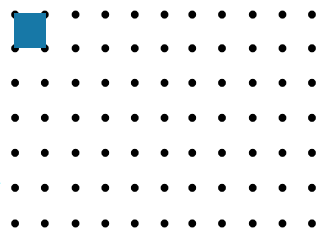
 Consider a grid. 

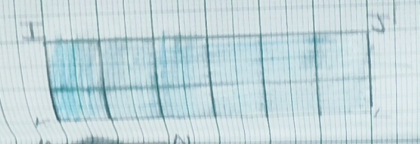
 Paste such square shaped slips on the grid and form squares and rectangles. 

One such is given below: 

 One such arrangement is: 

 Find the total number of such square slips in the above rectangular shape formed. 

 Tabulate the same. 

 This may give children an idea of calculating areas of squares and rectangles in a play way method 


Activity W4.1 – Exploring Area with Square Slips

Objective:

Help students understand area by forming rectangles using equal-sized square slips on a grid.

Instructions:

  1. Provide each student with:

    • A square grid sheet.

    • Several square-shaped slips (e.g., 1×1 cm paper squares).

  2. Ask them to arrange the slips to form larger rectangles or squares on the grid.

  3. Count how many slips were used.

  4. Record the length, breadth, and total number of slips (i.e., area).

 Example Arrangement:

Suppose students arrange 4 rows and 5 columns of square slips.

 Then:

LengthBreadthTotal Slips (Area)
5420
4520
They can try various combinations like:
  • 3 × 6 → Area = 18

  • 2 × 7 → Area = 14

  • 4 × 4 → Area = 16

Through repeated play, students understand:

Area = Length × Breadth

 Concept Generalized:

"The total number of square slips used to make a rectangle = Area = Length × Breadth"


Class 6 NCERT bridge course Answers Activity W3.6 Deriving Area Formulae

 Deriving formula of Area of Square, rectangle

 The children are familiar with the shapes, squares and rectangles. 

 The following activities may be performed to give them an idea of the formulae of the area of squares and rectangles. 

Activity W3.6 

Figure (a) (b) (c) 

 Give children such square and rectangular shapes made on grids. 

 Ask them to count the number of squares horizontally and vertically. 

 This will give them an idea of how long and wide the shape is. 

 The information can be filled in the table given below. 


📏📐 Part 2: Deriving the Area Formula for Squares & Rectangles

Objective:

To help students derive rather than memorize the formula for area of a square and rectangle.

Materials Needed:

  • Square and rectangular cut-outs (using graph paper helps)

  • Ruler

  • Pencil

Activity Steps:

Rectangle Area

Figure (a)
  1. Take a rectangle of length 5 units and breadth 4 units.

  2. Divide it into 1 × 1 unit squares.

  3. Count the total number of small squares.

  4. Students will find:
    Area = Length × Breadth = 5 × 4 = 20 square units

Figure (b)
  1. Take a rectangle of length 6 units and breadth 5 units.

  2. Divide it into 1 × 1 unit squares.

  3. Count the total number of small squares.

  4. Students will find:
    Area = Length × Breadth = 6 × 5 = 30 square units

Square Area Figure (c)

  1. Take a square with each side 5 units.

  2. Divide and count the 1 × 1 squares inside.

  3. Students will observe:
    Area = Side × Side = 5 × 5 = 25 square units


Conclusion:

  • Rectangle → Area = Length × Breadth

  • Square → Area = Side²


Wednesday, May 21, 2025

Class 6 NCERT bridge course Answers Activity W3.5 Exploring Symmetry in Design

 Activity W3.5 Exploring Symmetry in Design  

 Divide students into groups and provide them with coloured pencils or markers 

along with blank sheets of paper.

Asks each group to create a design that exhibits rotational symmetry. 

 Encourage them to experiment with different shapes and colours to make their designs more beautiful.

 Discussion 

 Lead a discussion on the importance of symmetry in art, architecture, and nature. 

 Encourage students to share examples of symmetrical patterns they have noticed in their surroundings.

 Explore 

 Take a nature walk around the school or nearby park and ask students to identify objects with rotational and reflection symmetry. 

 Organize a field trip to a museum or art gallery to observe symmetrical patterns in different forms of artwork. 


 Provide students with symmetry-themed puzzles and games to solve collaboratively, fostering teamwork and critical thinking skills. 

Symmetry is not only a fundamental concept in mathematics but also a source of inspiration for artistic expression. 

By exploring rotational and reflection symmetry, students can sharpen their observational skills, enhance their creativity, and develop a deeper appreciation for the beauty of symmetry in the world around them. 

So, let's continue to embrace symmetry as we embark on our journey of discovery and creativity!


Activity W3.5: Exploring Symmetry in Design 

 Creating Designs with Rotational Symmetry

Objective:

To understand rotational symmetry through hands-on design activity and connect symmetry to real-world patterns in art, nature, and architecture.

Activity Instructions:

  1. Group Work: Divide the students into small groups.

  2. Materials: Give each group blank paper, colored pencils, compass, and rulers.

  3. Task: Ask them to create original designs using basic shapes like circles, triangles, squares, or petals that show rotational symmetry.

  4. Rotate and Repeat: Let them repeat the pattern around a central point (e.g., 60°, 90°, 120° rotations).

Examples:

  • Mandala Design using repeated triangle or petal shapes.

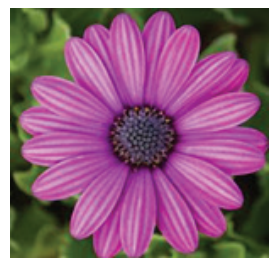
  • Flower pattern with 6 petals (rotational symmetry at 60°).

  • Star designs repeated around a center point.

Free-to-Use Image Suggestions:

Discussion:

  • Where do we see symmetry in life?
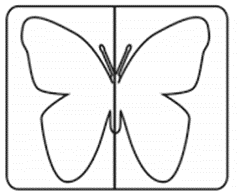
    ➤ Flowers, butterflies, spider webs, temples, mosques, palaces.

  • Why is symmetry important in art and design?
    ➤ It adds balance, beauty, and harmony.

Explore – Outdoor & Interactive Learning:

  • Nature Walk: Identify leaves, flowers, or insects with symmetry (e.g., starfish, butterflies).

  • Museum/Temple Visit: Observe symmetrical architecture and patterns.

  • Symmetry Puzzle Corner: Tangrams, mirror drawings, folding symmetry paper challenges.

Reflection Questions:

  • How does creating patterns help you understand math better?

  • Can you name real-world objects that have rotational or reflection symmetry?

  • Why do you think ancient architecture used symmetry?

Wrap-Up Message:

Symmetry and geometry go beyond math books. They help us appreciate the design of nature and human creations. Through drawing, observation, and active exploration, students don’t just learn — they experience mathematics.

Let’s continue to embrace the beauty of symmetry as we design, explore, and discover more!

Class 6 NCERT bridge course Answers Activity W3.4 Creating Patterns and Designs with Rotational and Reflection Symmetry

 Creating patterns and designs with rotational and reflection symmetry 

◻Symmetry is a property where one shape or arrangement can be transformed into another that looks the same. 

Activity W3.4  Creating Patterns and Designs with Rotational and Reflection Symmetry

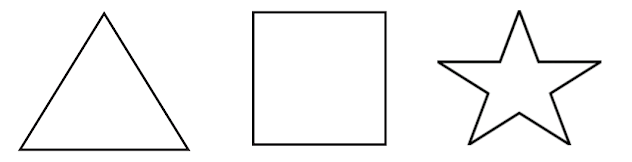
 ● Provide students with various shapes such as squares, triangles, and stars etc. 

 Ask them to rotate each shape and observe if it looks the same after a certain amount of rotation.

 Encourage them to identify the amount of rotation to get a similar shape.


Activity W3.4: Creating Patterns and Designs with Rotational and Reflection Symmetry

Objective:

To help students understand rotational and reflection symmetry by using basic geometric shapes and observing how they behave when rotated or reflected.

What Is Symmetry?

Symmetry is when a shape or design looks the same after a transformation like flipping (reflection) or turning (rotation).

  • Rotational Symmetry means a shape looks the same after being rotated (turned) by a certain angle.

  • Reflection Symmetry (also called line symmetry) means one half of the shape is a mirror image of the other.

Materials Needed:

  • Cut-outs of basic shapes: squares, equilateral triangles, rectangles, stars, circles

  • A protractor (optional)

  • Mirror strips (optional for reflection symmetry)

  • Chart paper or plain grid sheets

  • Colored pencils/markers

Part 1: Exploring Rotational Symmetry

 Instructions:

  1. Give each student a shape cut-out.

  2. Ask them to rotate the shape by 90°, 180°, 270°, and 360°.

  3. At each step, check if the shape looks the same.

  4. Record the angles where the shape matches its original position.

Example:

  • Square:
    Rotational symmetry at 90°, 180°, 270°, and 360°
    → It has rotational symmetry of order 4.


  • Equilateral Triangle:
    Rotational symmetry at 120°, 240°, 360°
    → Order 3.


  • Star (5-pointed):
    Rotational symmetry every 72° (360° ÷ 5)
    → Order 5.


Part 2: Exploring Reflection Symmetry

Instructions:

  1. Fold the shape in half in different directions.

  2. If both halves match, then the shape has reflection symmetry along that fold.

  3. Mark all possible lines of symmetry.

Example:

  • Rectangle: 2 lines of symmetry (vertical and horizontal) 


  • Square: 4 lines of symmetry


  • Circle: Infinite lines of symmetry


  • Heart: 1 vertical line of symmetry


Extension: Creating Symmetry-Based Designs

  1. Use rotation and reflection to create rangoli-like patterns.

  2. Repeat triangles or stars around a center point to form a mandala.

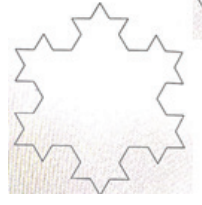
  3. Fold and cut papers to make snowflake patterns using symmetry.

Shapes Set Geometric Shapes


Discussion Questions:

  • Which shapes have the most lines of symmetry?

  • Does every shape have rotational symmetry?

  • Can a shape have rotational symmetry but no reflection symmetry?

Conclusion:

By experimenting with common shapes, students develop a visual understanding of both reflection and rotational symmetry. These foundational geometry skills help in art, math, and logical reasoning.

Class 6 NCERT bridge course Answers Activity W3.3 A Treasure Hunt

 Activity W3.3 A Treasure Hunt

A Treasure Hunt Provide each student with a copy of the treasure map, 

which includes coordinates (i.e., pairs of numbers discussed in earlier activity) 

marking the location of the treasure. 

 Explain the objective of the activity:

 to use the given coordinates to locate the treasure.

 Allow students to work individually or in pairs to navigate the map and find the treasure.

Once the treasure is found, celebrate the successful completion of the hunt and discuss the coordinates used to locate the treasure. 

 Encourage students to create their own treasure maps for future activities, incorporating coordinates and landmarks of their choice


Let's imagine this map uses a simple grid system 
The bottom left 
The top right-) 
Starting point where the pirate boy is A (15,4) 
Pirate ship B (7,3) 
Skull Rock C(6,7) 
Crocodile pond D (3,8) 
Light house E (11.I0) 
Dragon cave F(13,8) 
X Marks the Treasure G(13,5)


Activity W3.3: A Treasure Hunt Using Coordinates

Objective:

To reinforce the concept of coordinates by having students locate "hidden treasures" on a grid-based map using ordered pairs (x, y). This activity enhances spatial reasoning, logical thinking, and basic map-reading skills.

Materials Needed:

  • A Treasure Map (printed or drawn grid map with landmarks and labeled axes)

  • Clue cards with coordinates (e.g., (3, 5), (7, 2))

  • Pencil and colored markers

  • Small tokens or stickers to mark the treasure

  • Optional: Geo boards or tactile grids for visually challenged students

 How It Works:

  1. Provide the Treasure Map:
    Each student or pair gets a printed map grid, e.g., a 10x10 grid. The x-axis (horizontal) and y-axis (vertical) should be labeled from 1 to 10.

  2. Mark Landmarks for Storytelling (Optional):
    Include fun icons like a palm tree at (4, 2), a ship at (1, 9), a cave at (8, 3), a skull rock at (6, 6), and the treasure chest at (5, 7).

  3. Explain the Coordinates:
    Review that each coordinate tells:

    • How far to go right (x)

    • How far to go up (y)

  4. Start the Hunt:
    Distribute clue cards or call out clues like:

    • “Go to (3, 4) to find the old lighthouse.”

    • “Then head to (5, 7) to discover the buried treasure.”

  5. Finding the Treasure:
    When students reach the treasure coordinate, they mark it and celebrate!

 Example:


Treasure Map Coordinates Clue List:

  • (2, 1): "Start here at the Dock"

  • (4, 2): "Visit the Palm Tree"

  • (6, 6): "Avoid the Skull Rock"

  • (5, 7): "YOU FOUND THE TREASURE!"

 Encourage Students To:

  • Create their own maps with different landmarks and hidden treasure spots.

  • Write short stories or clues leading to their hidden treasure using coordinates.

  • Trade maps with friends and solve each other’s treasure hunts!

 Learning Outcomes:

  • Understand and apply the concept of coordinates (x, y).

  • Improve directionality and navigation skills.

  • Foster creativity and collaborative learning.


Class 6 NCERT bridge course Answers Activity W3.2 Exploring Coordinates on a Checkerboard Grid

 Activity W3.2 

Ask the students to take a piece of paper that looks like a big checkerboard, 

with lots of little squares on it. 

Each of these squares has its own special address, i.e., giving each square a name so that we can find it easily. 

 Give the students two numbers, say (3, 4), to tell us where a square is. 

 The first number tells us how far to move to the right.

 The second number tells us how far to move up or down.

 Give plenty of such numbers and ask them to plot these on the grid.

 This gives them an intuitive idea of the coordinate system.

 Students may try plotting some points on our own grid! 

It's like connecting the dots to reveal a hidden picture. 

(Please provide such graphics for connecting dots as hands on activity)

 Plastic mesh grid or geo board may be used for students with visual challenges.


Activity W3.2: Exploring Coordinates on a Checkerboard Grid

Objective:
Help students understand the concept of coordinates as addresses on a grid, by plotting points given as ordered pairs (x, y).

Procedure:

  1. Introduce the Checkerboard Grid:
    Provide students with a sheet of paper printed with a big checkerboard or grid made up of small squares (for example, a 10x10 grid).

  2. Explain the Coordinates:
    Each square on the grid has a special address or coordinate, written as a pair of numbers (x, y).

    • The first number (x) tells how many squares to move to the right starting from the origin (bottom-left corner).

    • The second number (y) tells how many squares to move up from the origin.

  3. Plotting Points:
    Give students coordinate pairs such as (3, 4), (1, 7), (5, 2), etc.
    Ask them to find the corresponding squares on the grid and mark those points with a dot or sticker.

  4. Connect the Dots:
    Once all the points are plotted, students connect the dots in the order given to reveal a hidden shape or pattern. This can be a simple shape like a house, a star, or a letter.

  5. Encourage Creativity:
    Invite students to create their own sets of coordinates and swap with classmates to plot and reveal new pictures.

Example Coordinates to Plot (for a simple house shape):

PointCoordinates (x, y)
A(2, 2)
B(2, 5)
C(4, 7)
D(6, 5)
E(6, 2)
F(2, 2)
Connect points A → B → C → D → E → F to outline the house.

Additional Notes:

  • For students with visual challenges, use a plastic mesh grid or geoboard with tactile strings or rubber bands to feel the shape.

  • Encourage using colorful markers or stickers for points and lines.

  • To visualize the coordinate system better, label the x-axis and y-axis clearly on the grid.


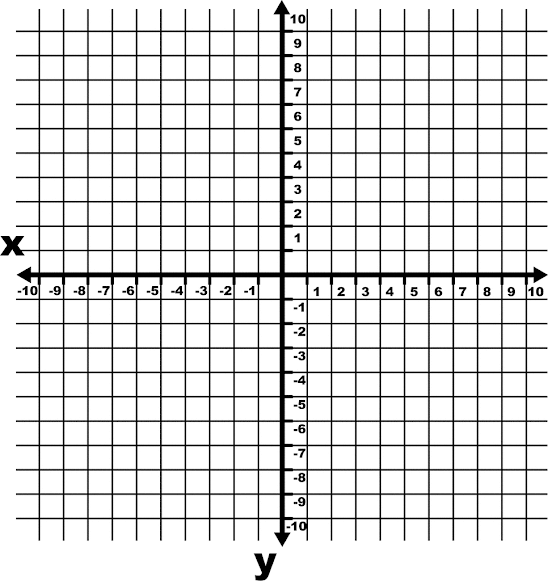
  • A large grid (10x10 squares) labeled with numbers along the bottom (x-axis) and side (y-axis).


  • Points plotted at example coordinates.


  • Lines connecting points to form a simple recognizable shape (e.g., house).


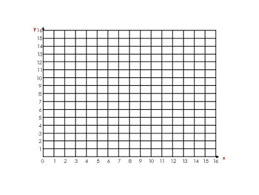
  • A blank grid for students to try their own plotting.


Pages

class 7 algebraic expression quiz model

Class 7 Algebraic Expressions - 100+ MCQ Index => 🖨️ Print / Save as PDF Class 7 Algebraic Expressions Quiz...